INDIA
OCCASION-WEAR WOMENSWEAR D2C
SHOPIFY WEBSITE BUILD
Santé Couture didn't have one collection to sell. It had dozens of dresses across ever-changing moods.
An Indian occasion-wear label with a constantly rotating catalogue of individually named, limited-production pieces needed a Shopify store that could organize mood-based collections and seasonal drops without turning into an unstructured product dump. Here's what we built.




Pain Point
Santé Couture wasn't selling one collection. It was running several moods at once, and none of them could blur into the others.
A brand with individually named pieces, Amora, Luna, Starlit, and Velvet Secret among dozens more, and multiple simultaneous collections, Girls Night Out, Glamour Party, Sexy in Satin, seasonal drops like Hello Darling '25 and Allure '25, faces a structural challenge most single-collection labels don't. Without clear organization, a catalogue this size and this varied risks becoming an undifferentiated scroll, where a customer looking for a Girls Night Out dress can't easily tell it apart from a Glamour Party piece. Each mood-based collection needed its own distinct tone and identity, while the site as a whole still had to feel like one considered brand. On top of that, genuine customer photos from the ‘#SanteGirls’ community needed a home that did that social proof justice, not just a scattered set of screenshots. The challenge wasn't the range or the naming, it was building a store structured enough to make an extensive, ever-rotating catalogue feel curated rather than overwhelming.
“A catalogue this varied doesn't sell itself by being big. It sells by being organized enough that every mood finds its customer.”
Services deployed
Execution





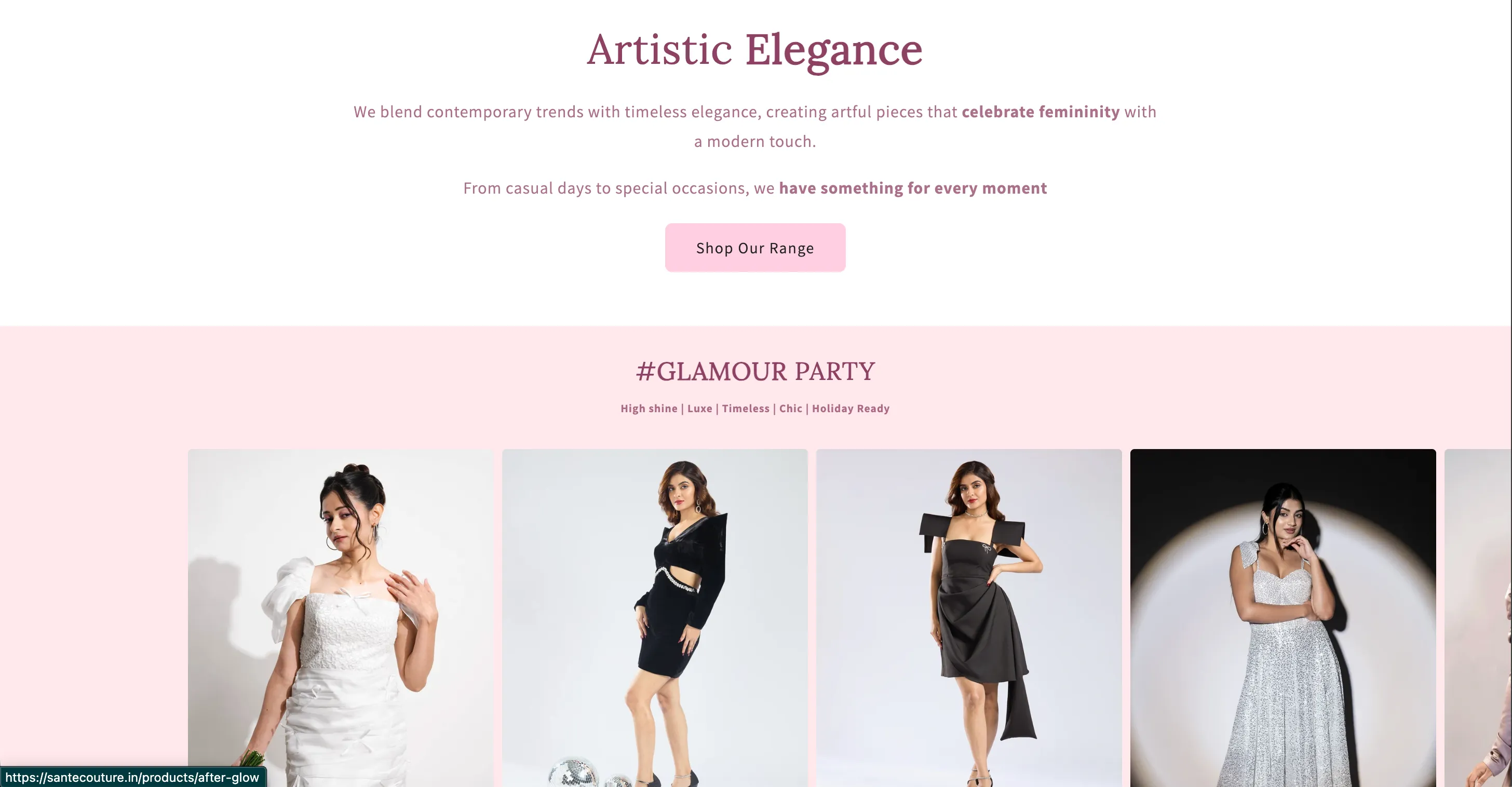
Girls Night Out, Glamour Party, and Sexy in Satin were each given their own tone, tagline, and curated product set, so the site read as several considered moods rather than one long scroll.
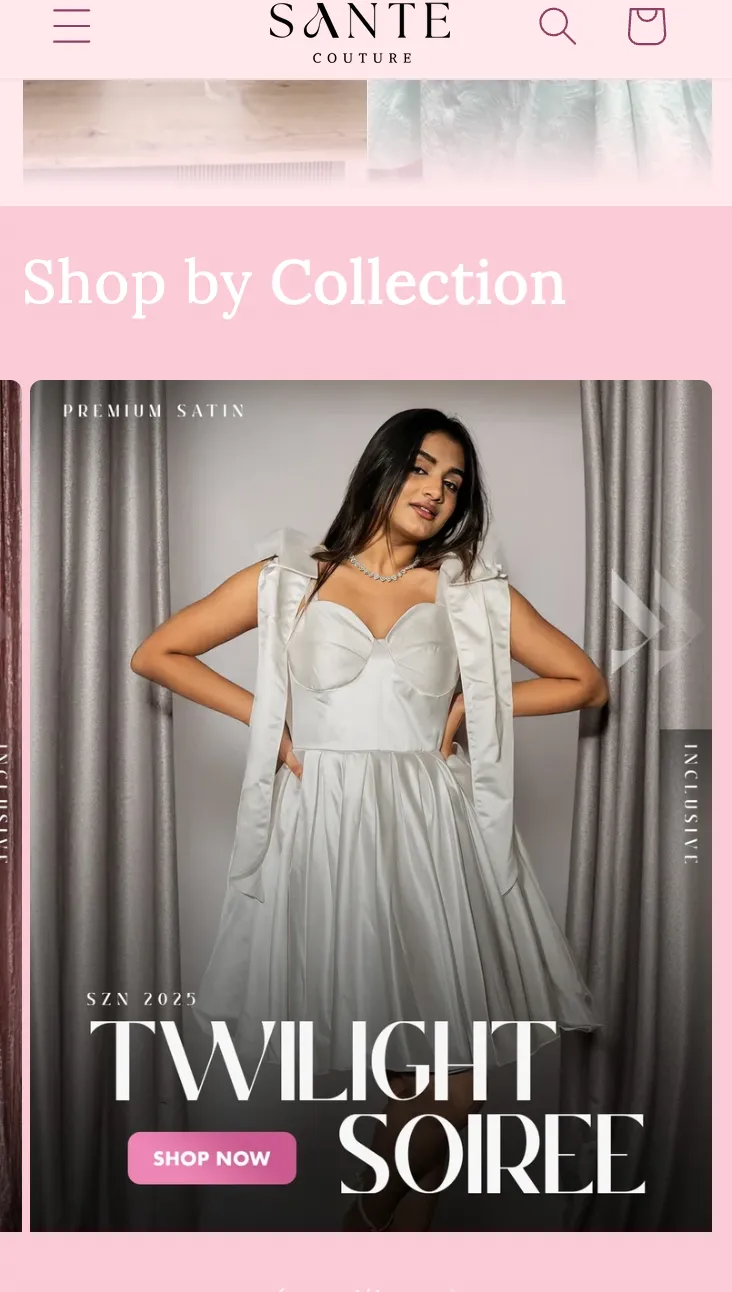
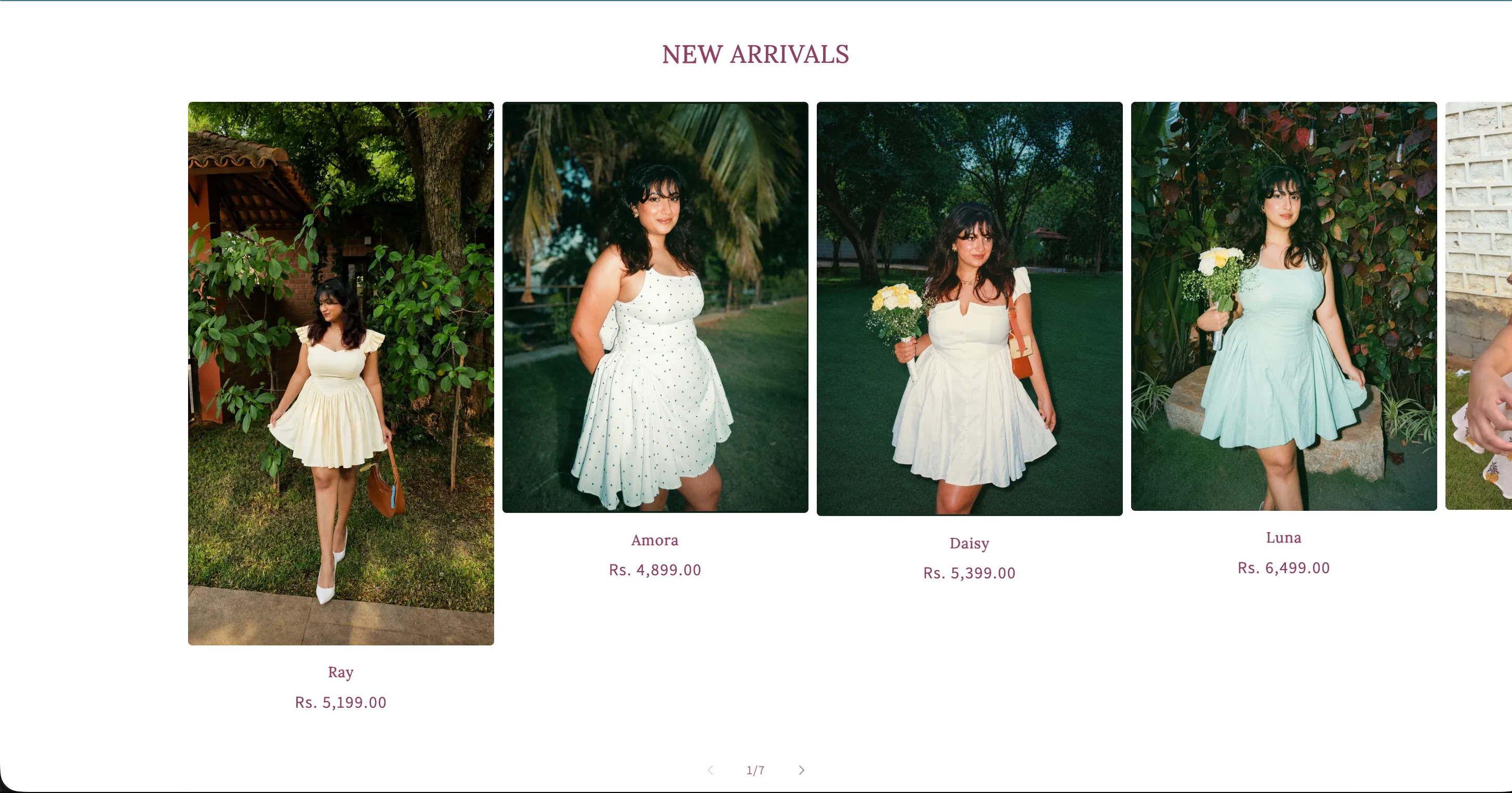
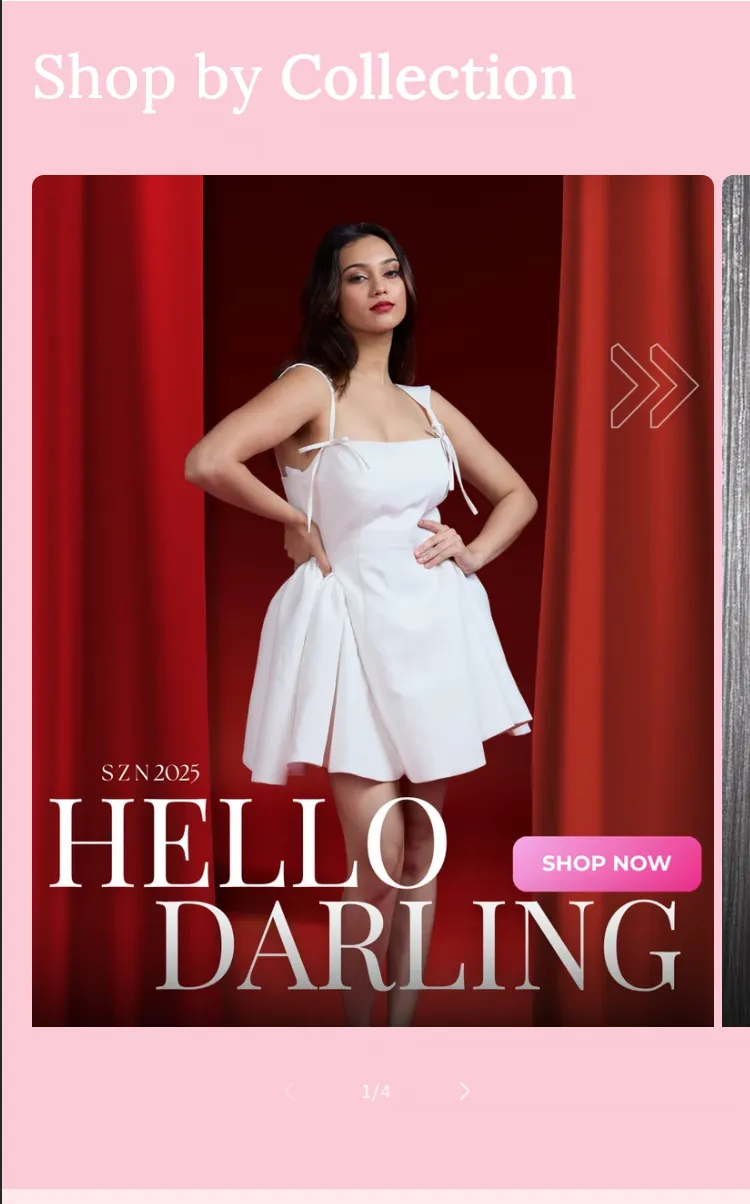
Hello Darling '25, Allure '25, Twilight Soiree '24, and other drops were given dedicated collection pages, keeping new arrivals organized as the catalogue kept rotating.
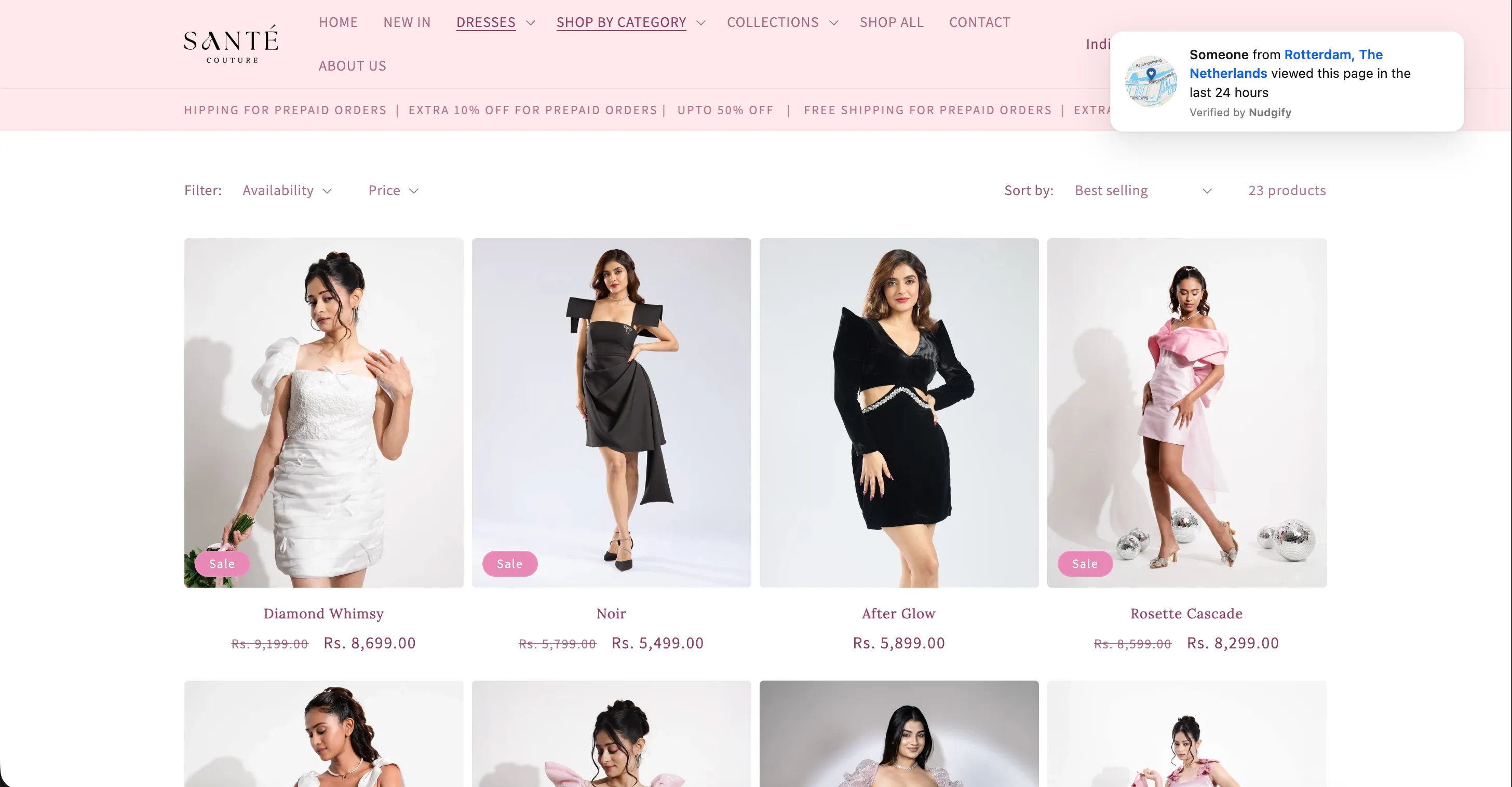
Every dress, Amora, Luna, Starlit, Velvet Secret, was treated as its own named piece rather than a generic SKU, carried through consistent product page structure.
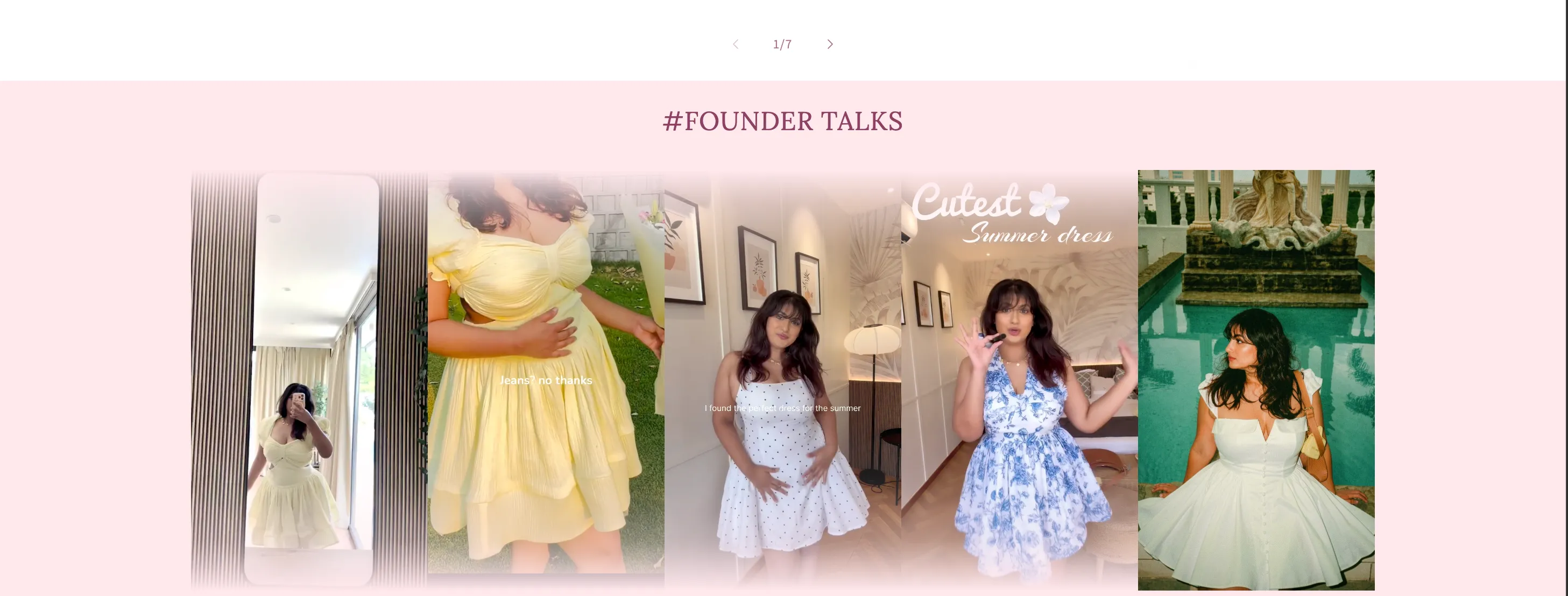
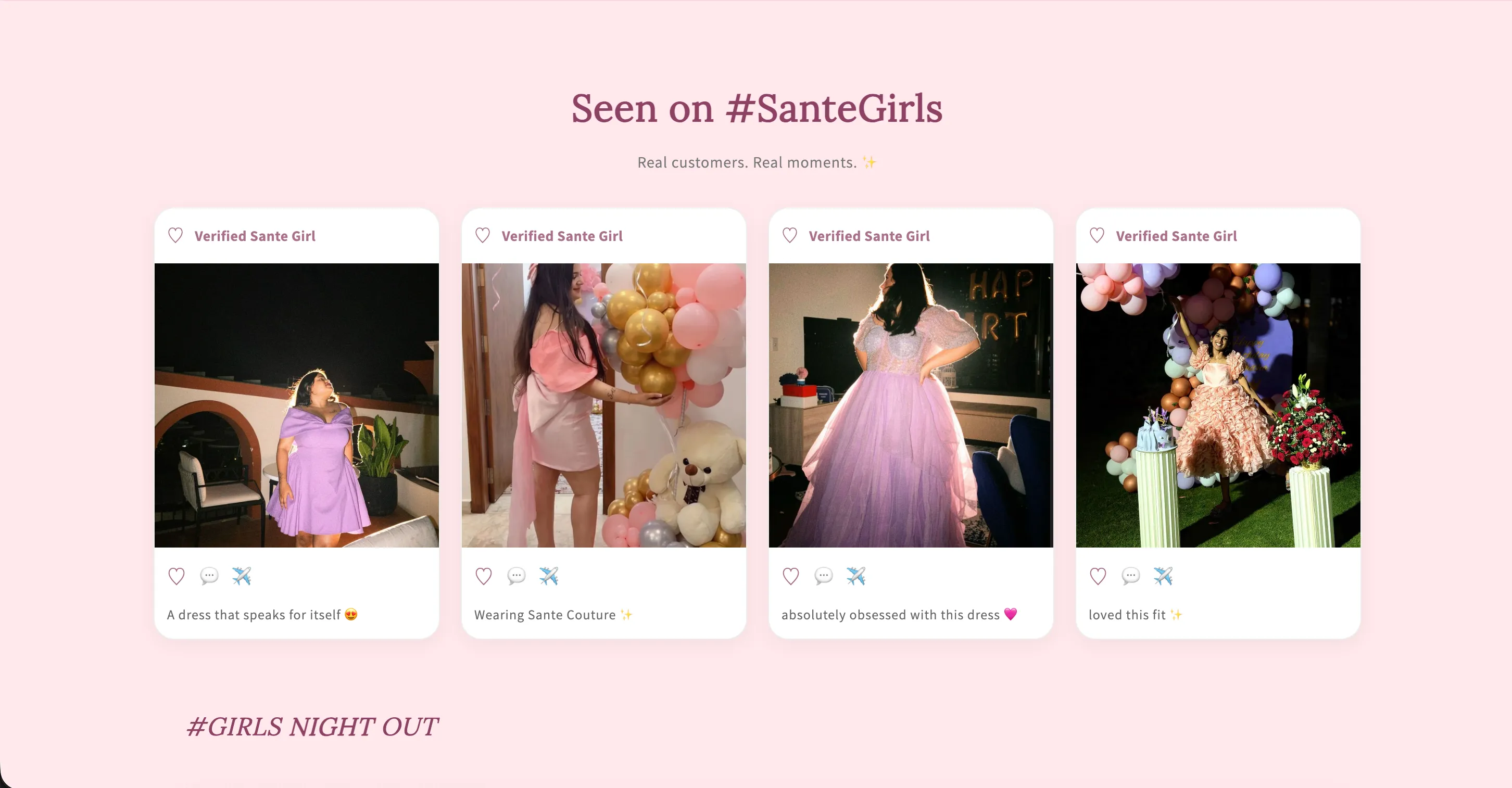
Genuine customer photos were structured into their own homepage section, giving real-world styling moments a proper showcase rather than leaving them scattered across social media.
Before & After
Before
After
No structure for multiple simultaneous collections
New arrivals folded into the general catalogue
Risk of individually named pieces reading as generic SKUs
Customer content scattered across social media
Risk of one undifferentiated dress catalogue
No unifying visual language across collections