US
DERMATOLOGIST-LED SKINCARE D2C
SHOPIFY WEBSITE DESIGN
Remedy Skin makes clinically-backed, all-in-one treatments. The website had to make ‘stacked’ actives feel simple, not overwhelming.
A dermatologist-founded skincare brand needed a Shopify store that could turn complex, multi-ingredient formulations into a simple, concern-first shopping experience. Here's what we built.


Pain Point
Remedy Skin's whole promise was simplicity. The website couldn't undercut that with a complicated shopping experience.
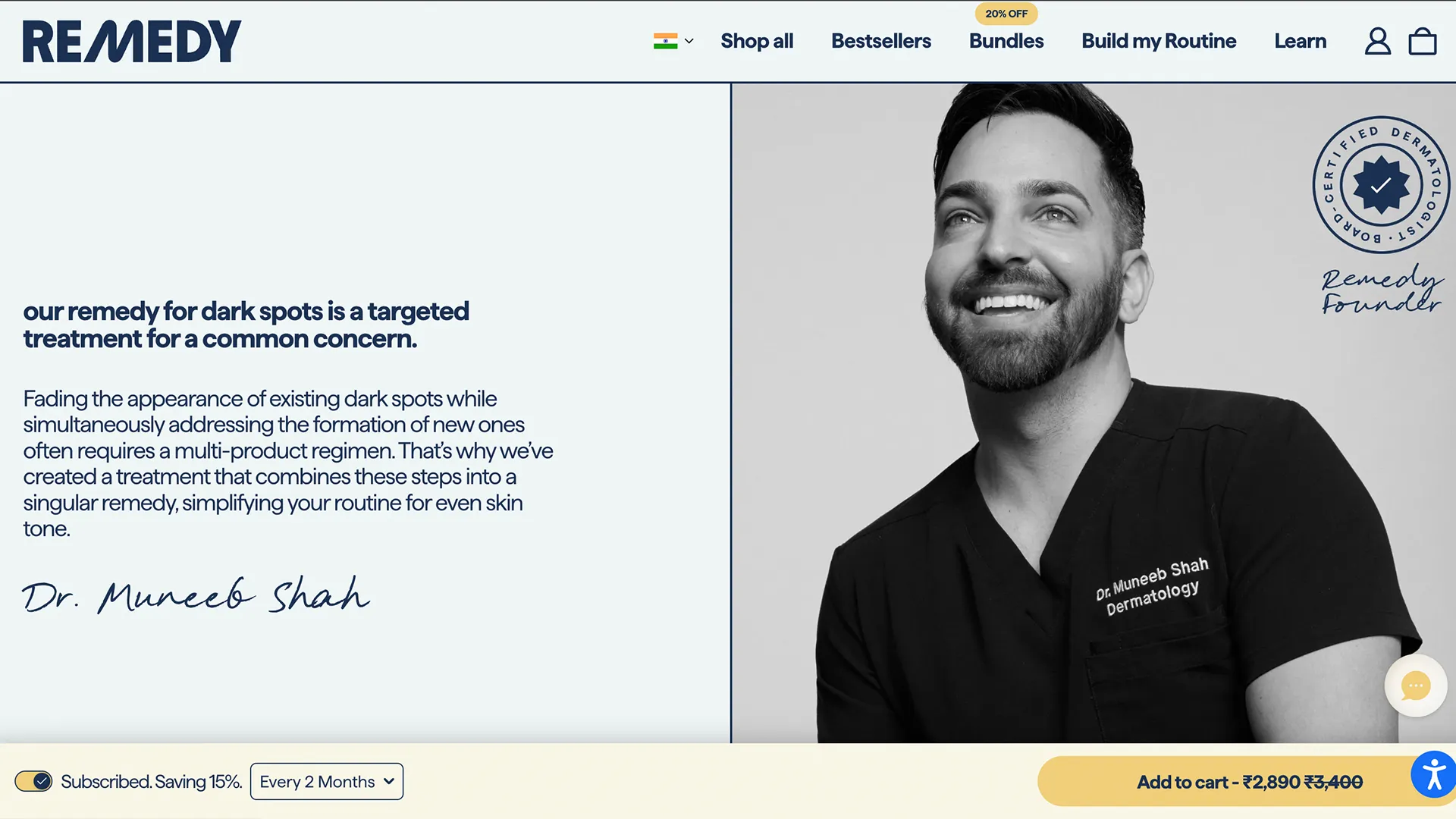
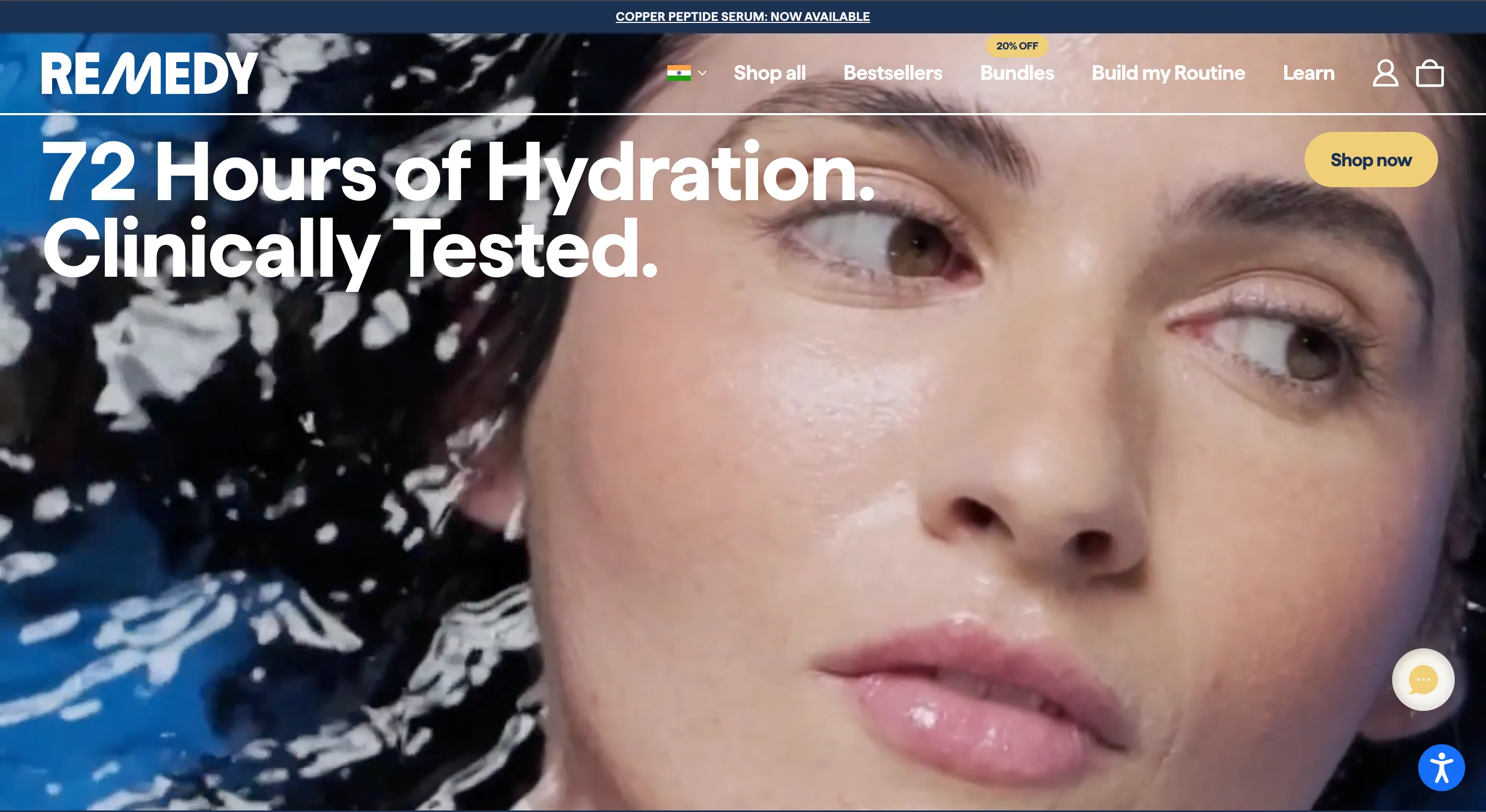
A brand built on ‘Super Stacked’ treatments, formulas that do the work of several products in one, has a specific positioning to protect: skincare doesn't have to be complicated to be effective. But that promise is easy to undermine with a site structure that makes shoppers dig through dozens of products, unclear skin concerns, and generic product pages to find what actually applies to them. With a real dermatologist's name behind the brand and a genuinely rigorous ‘Do No Harm’ formulation standard, Remedy also needed a site polished enough to match a founder with millions of followers and a retail presence in Target stores nationwide. The challenge wasn't the product philosophy, it was building a store that let customers shop by their actual skin concern first, and made the clinical rigor behind each formula visible without turning every product page into a science lecture.
“A brand promising simplicity can't ask customers to work hard to find the right product. The site has to do that thinking for them.”
Services deployed
Execution





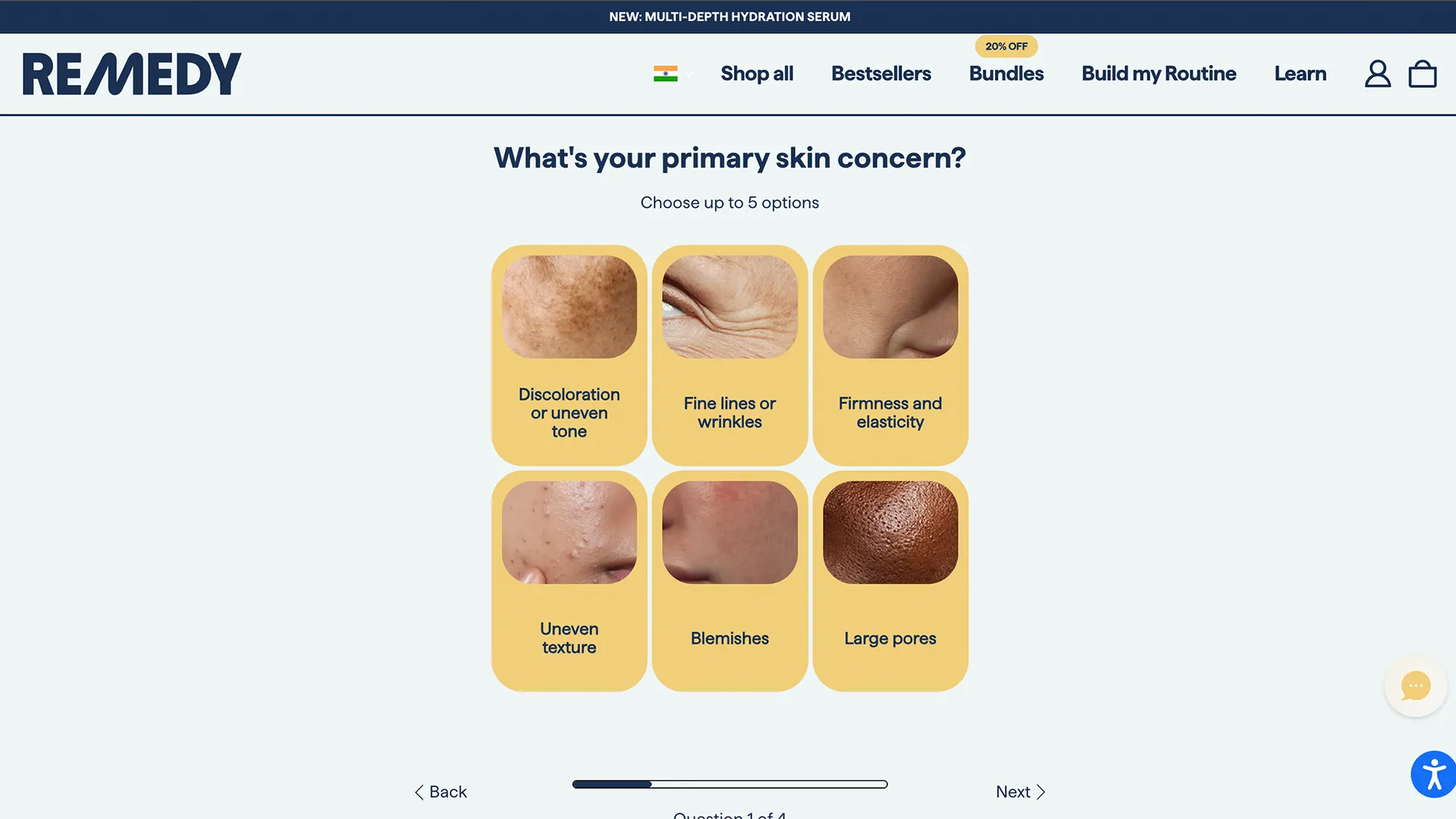
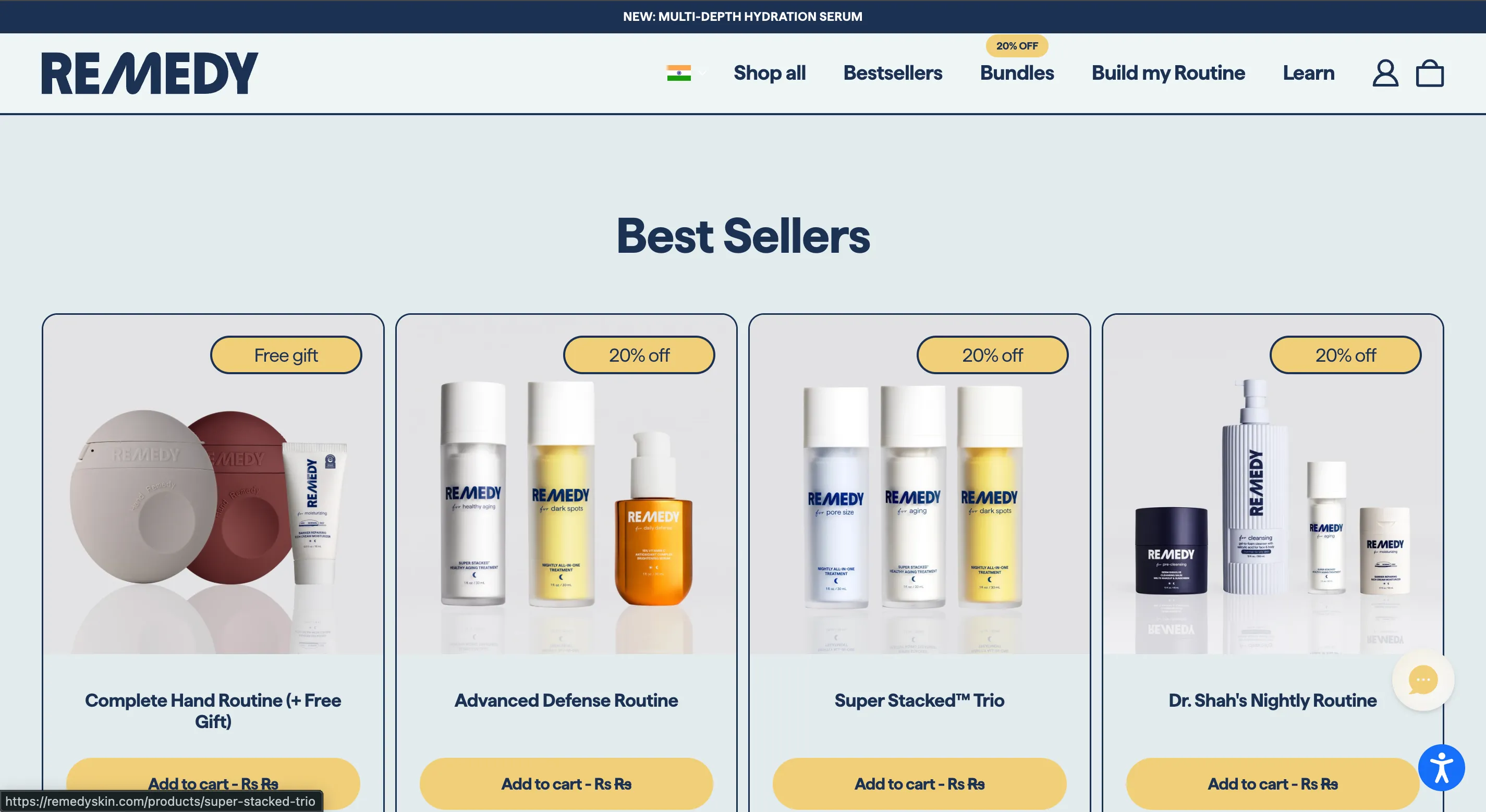
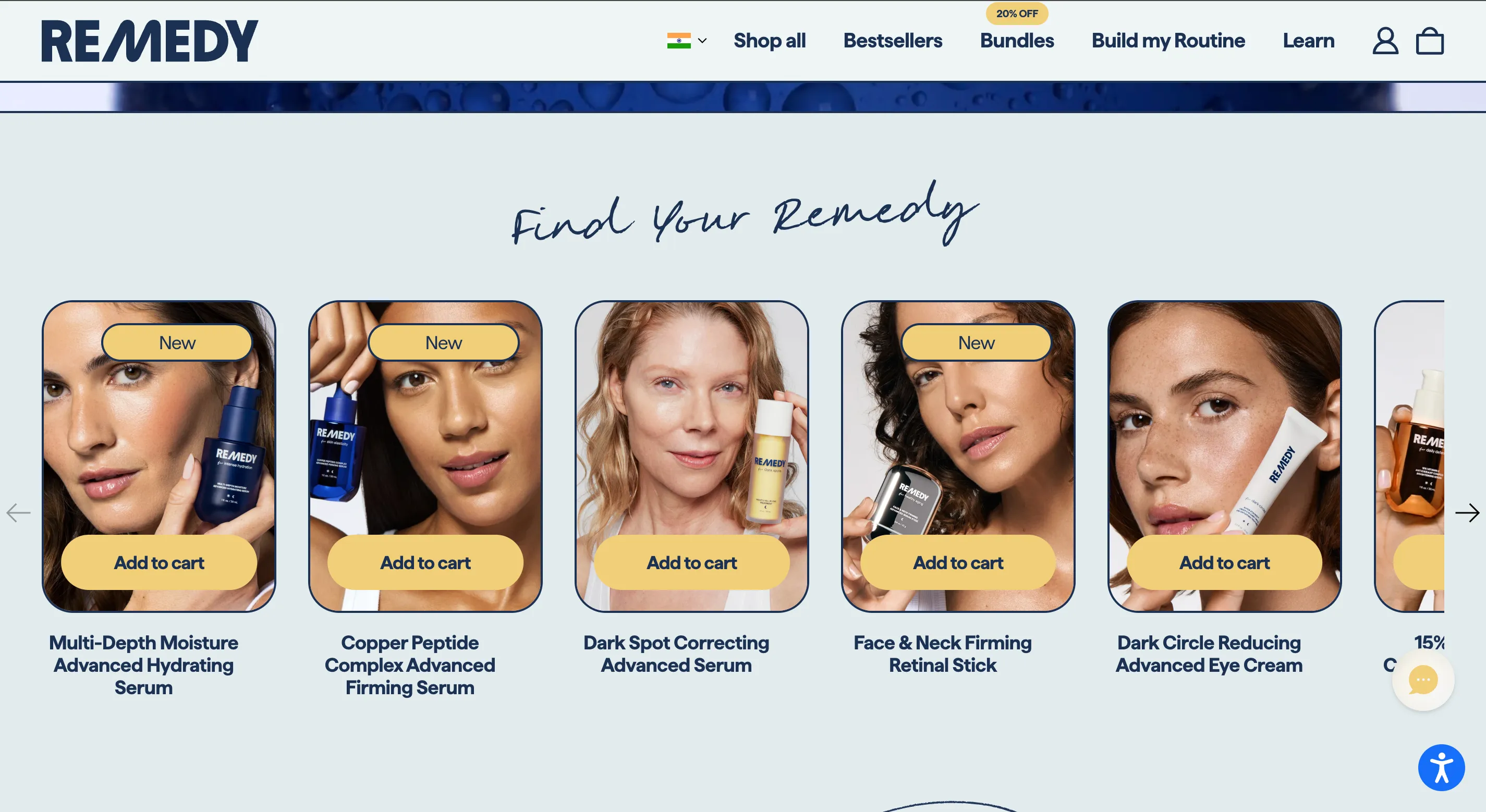
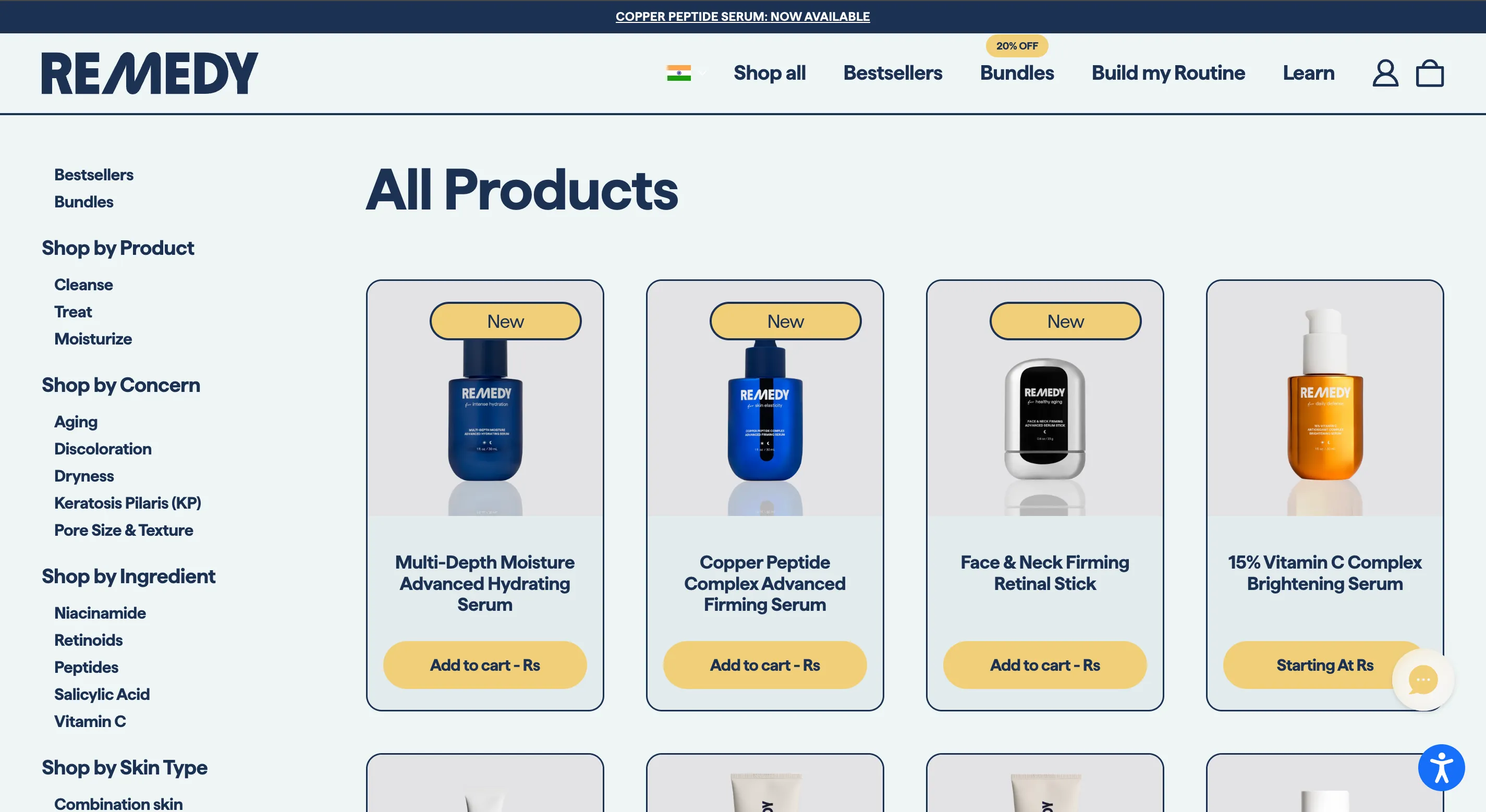
Customers could browse by skin concern, skin type, ingredient, or routine step, not just a flat product grid, so a first-time visitor could find their exact issue in seconds.
Each ‘Super Stacked’ treatment was presented with its specific concerns and matching benefits side by side, translating clinical formulation into a plain-language shopping decision.
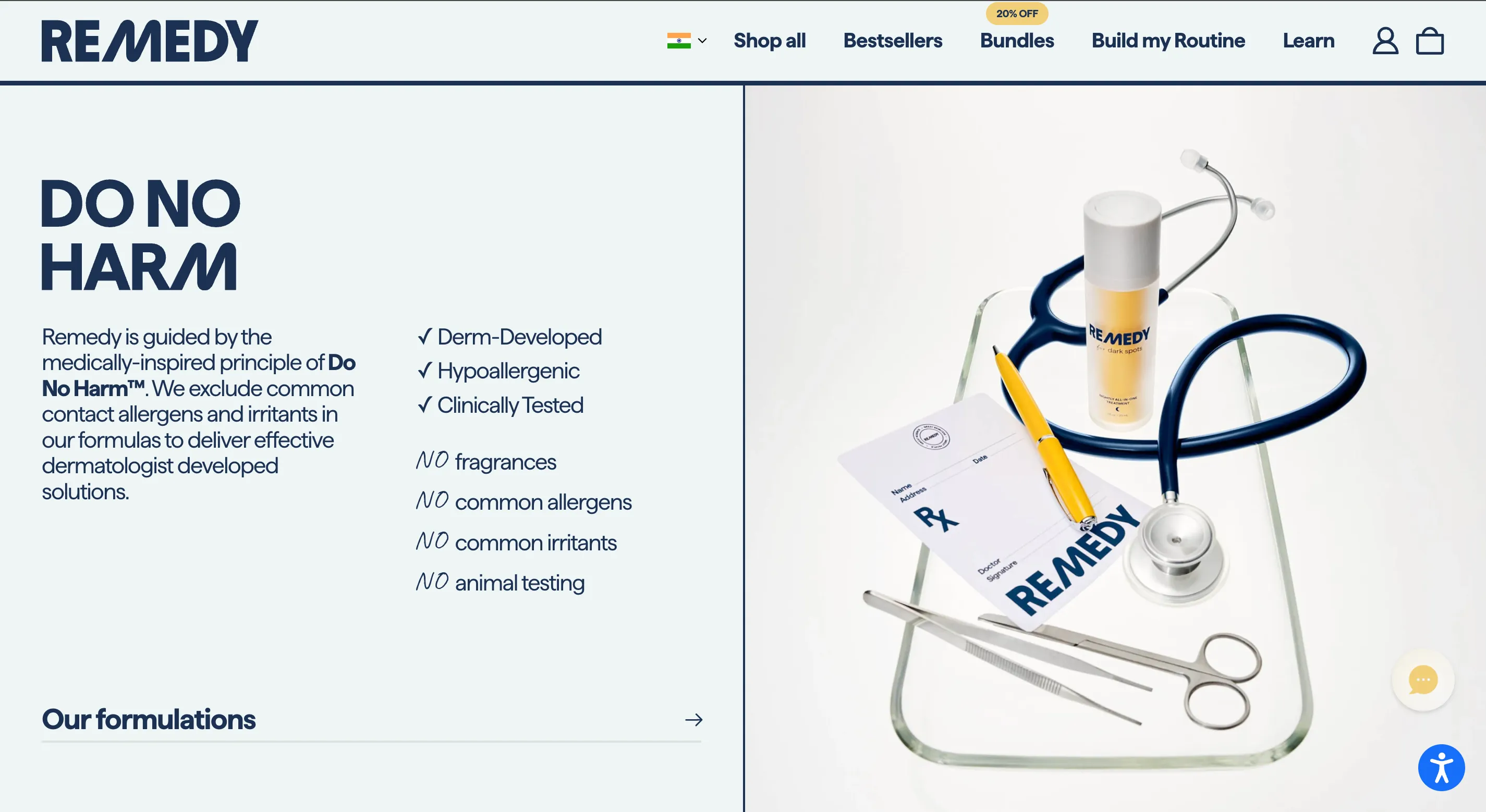
Hypoallergenic, fragrance-free, allergen-free, and cruelty-free claims were built into their own dedicated section, not buried in ingredient lists.
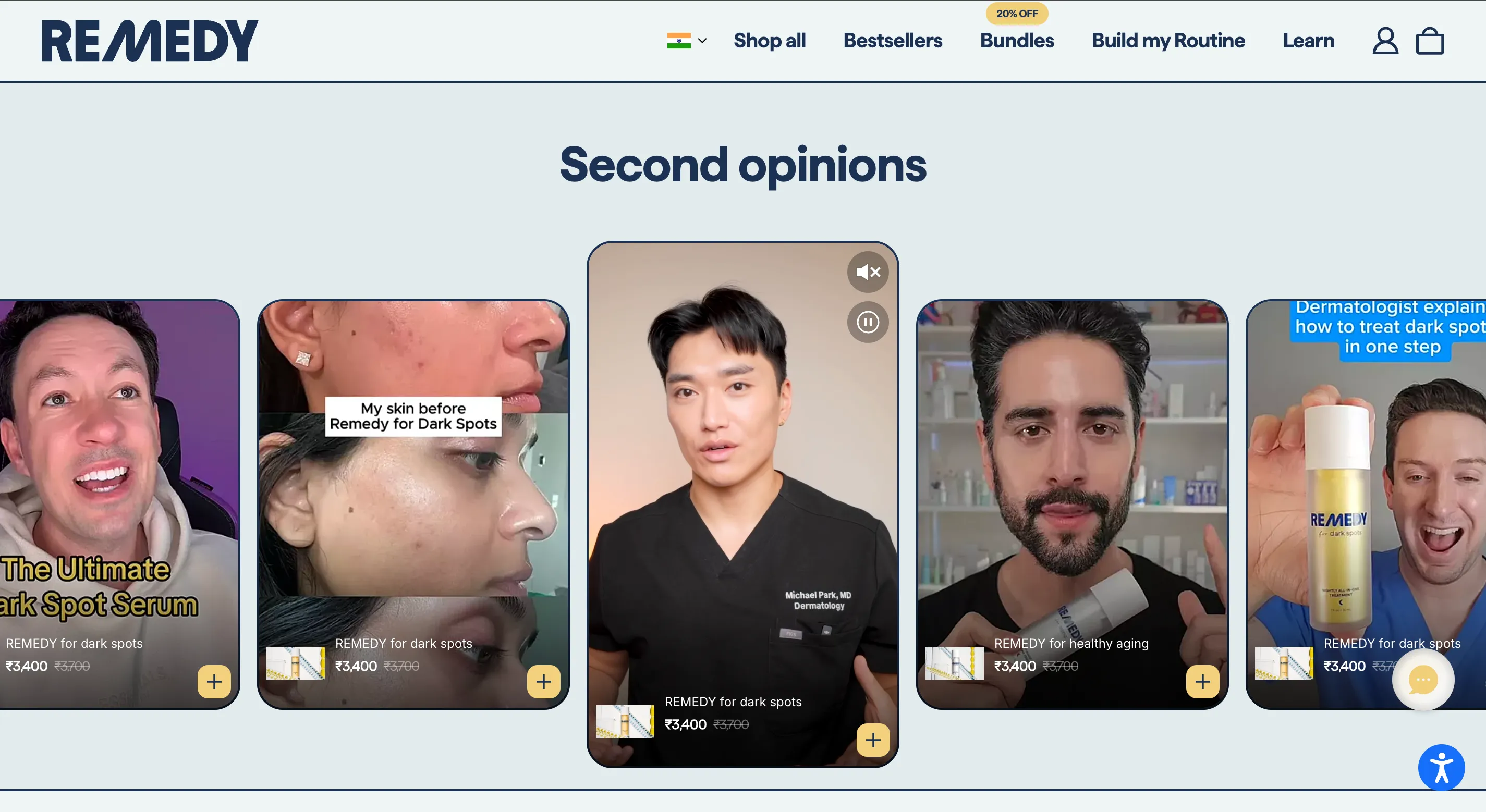
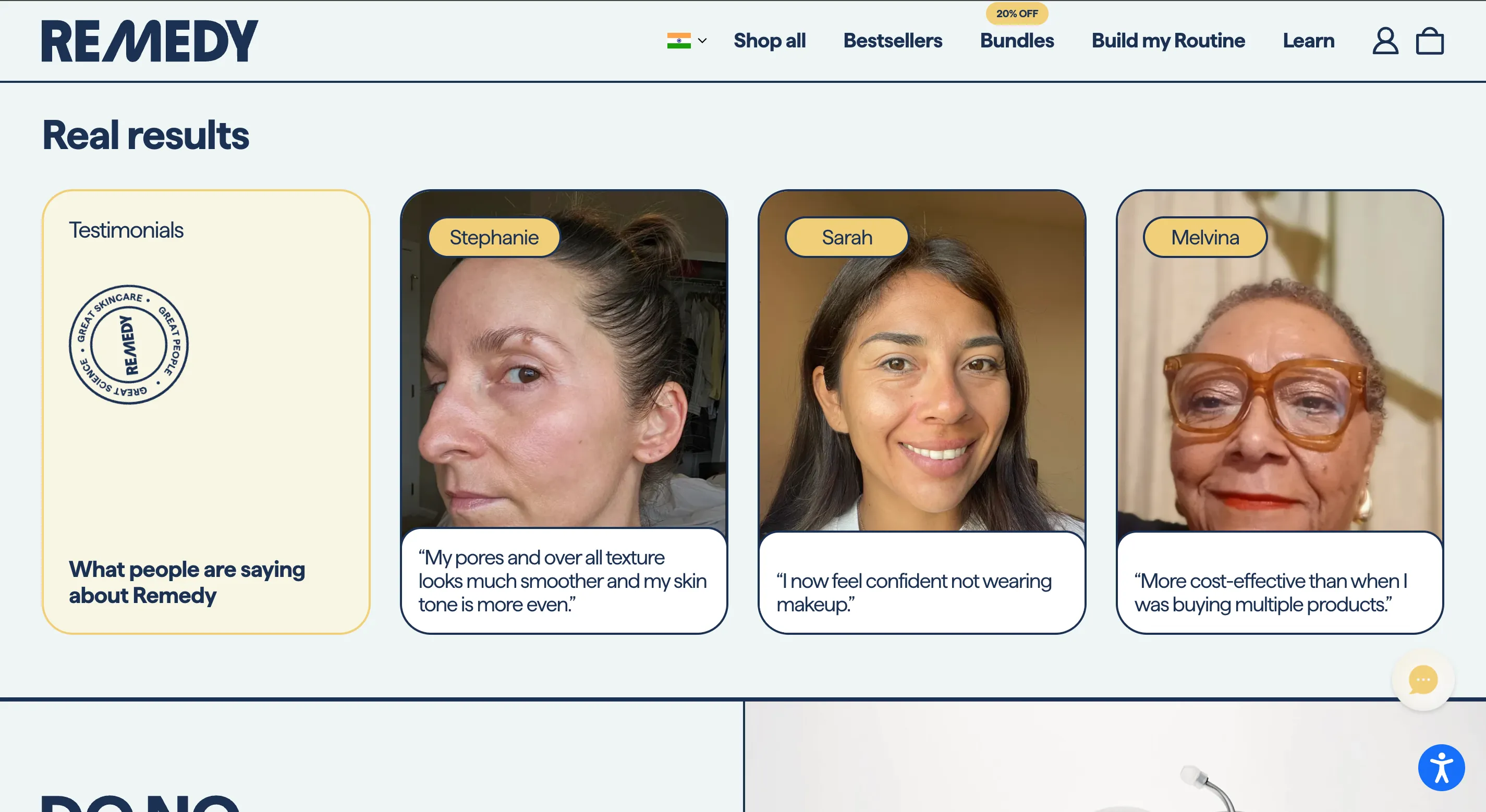
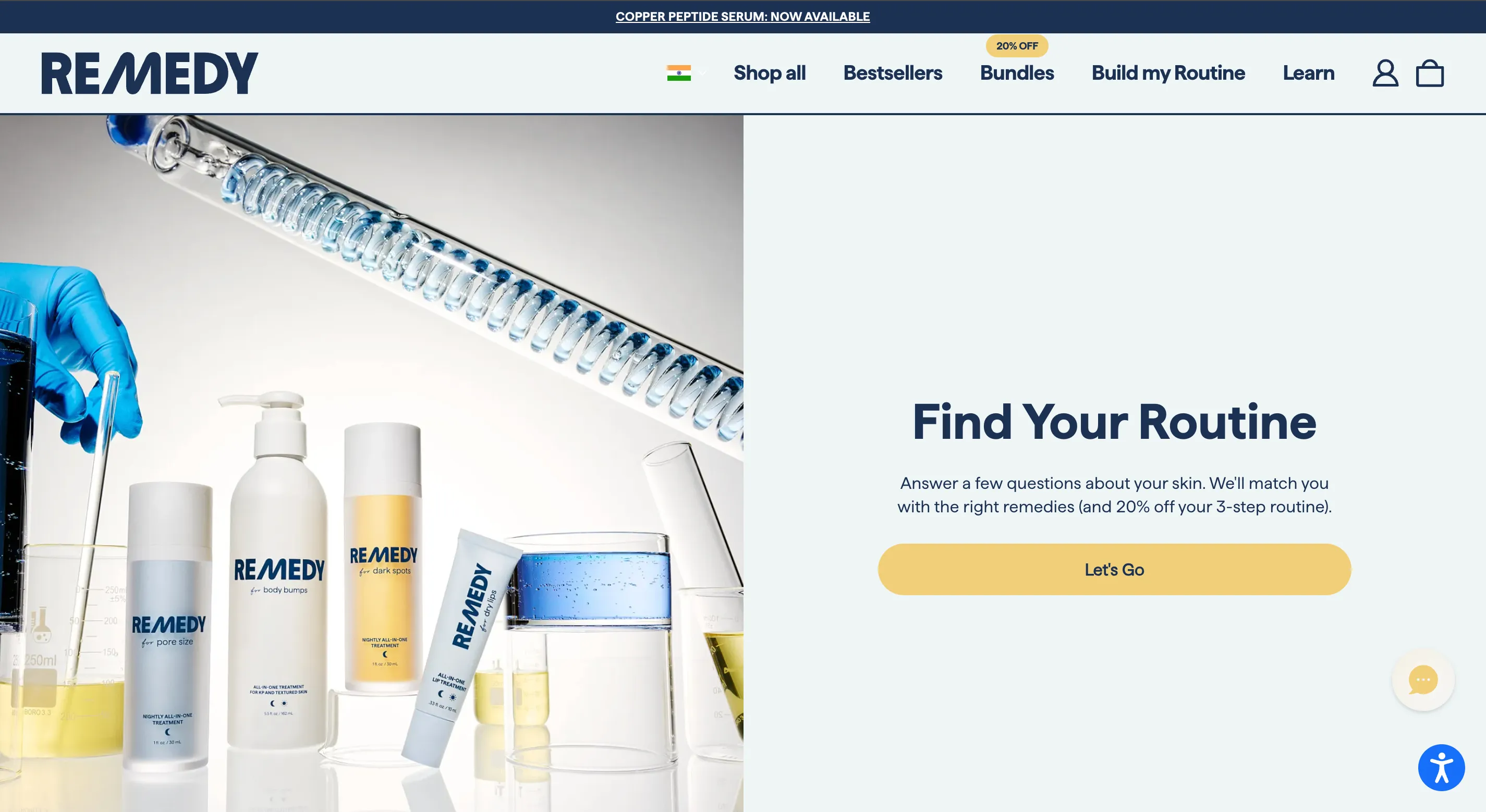
Customer photos and specific results sat alongside a ‘Build My Routine’ quiz, giving both social proof and a guided path for shoppers unsure where to start.


Before & After
Before
After
Flat product catalogue, no concern-based navigation
Clinical formulations without plain-language framing
Do No Harm standards not visually prominent
No structured path for uncertain customers
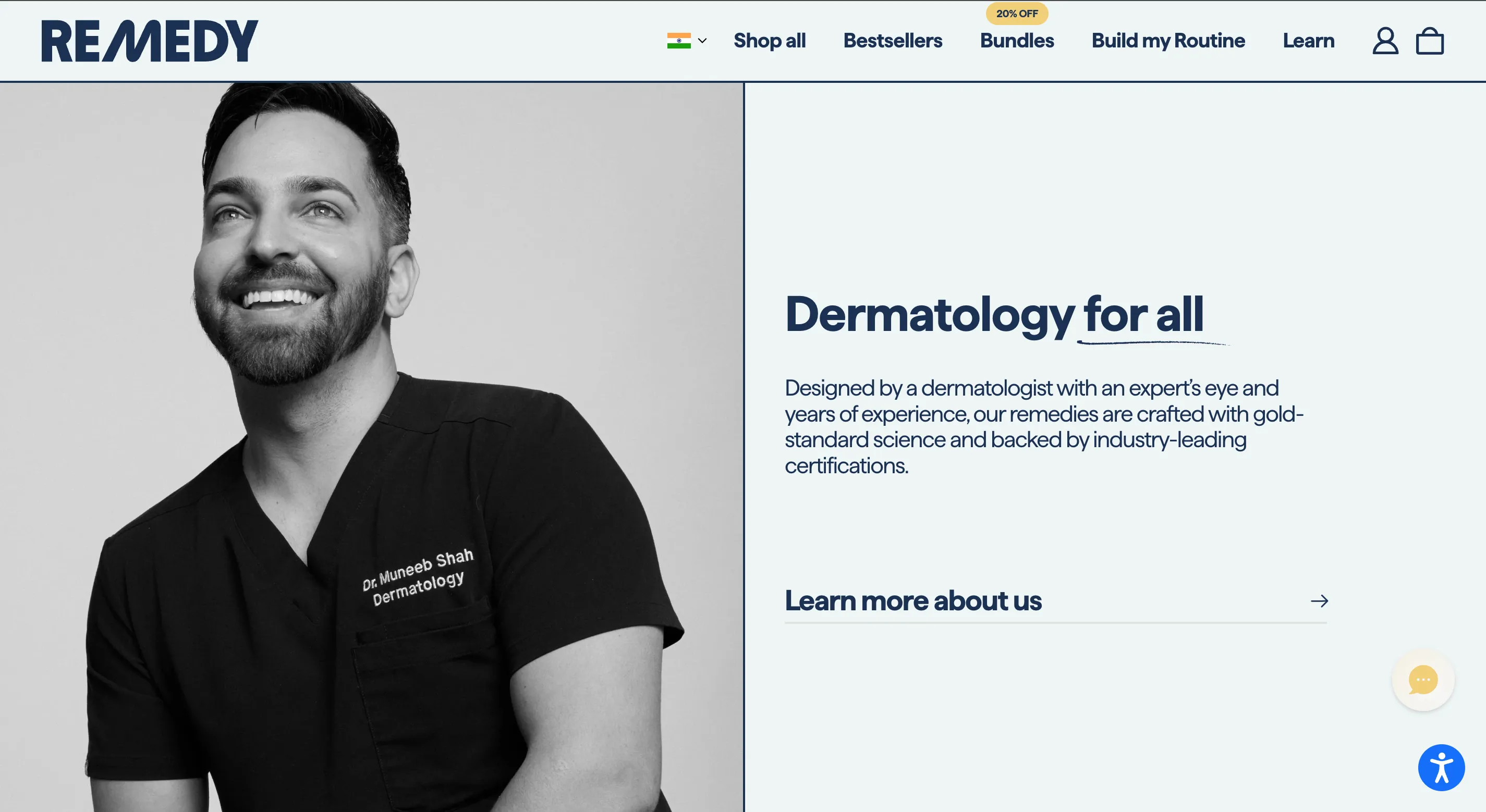
Founder authority and retail presence underused on-site
Risk of reading as a generic multi-product skincare catalogue