INDIA & FRANCE

LUXURY LEATHER GOODS D2C

DUAL-MARKET LAUNCH

Barcaan's D2C Website Launch in the Indian and French Market.

A luxury leather goods brand needed two Shopify stores that each felt native to their market, not one generic build stretched across both. Here's the dual-market system we built.

PRODUCT

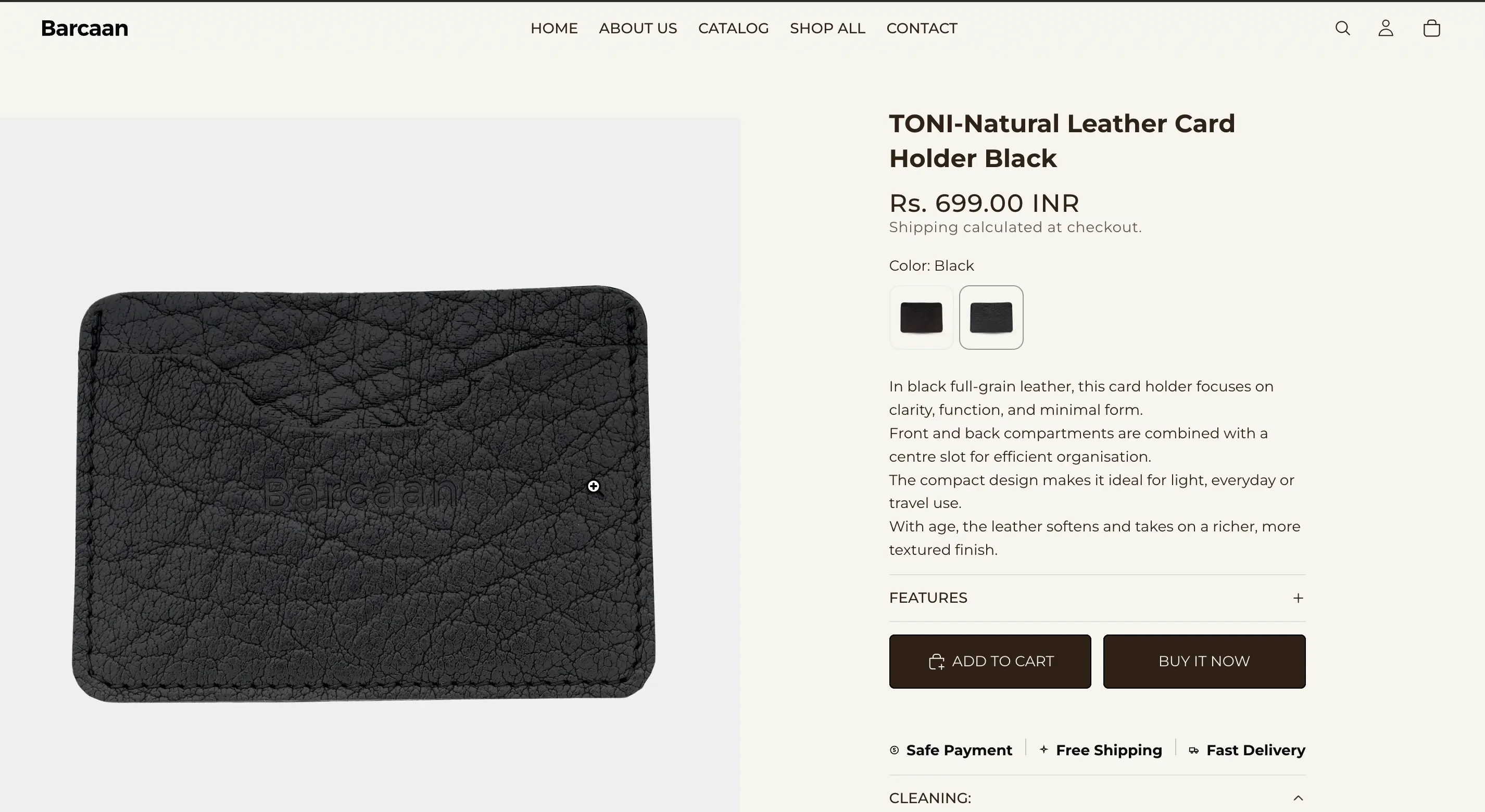
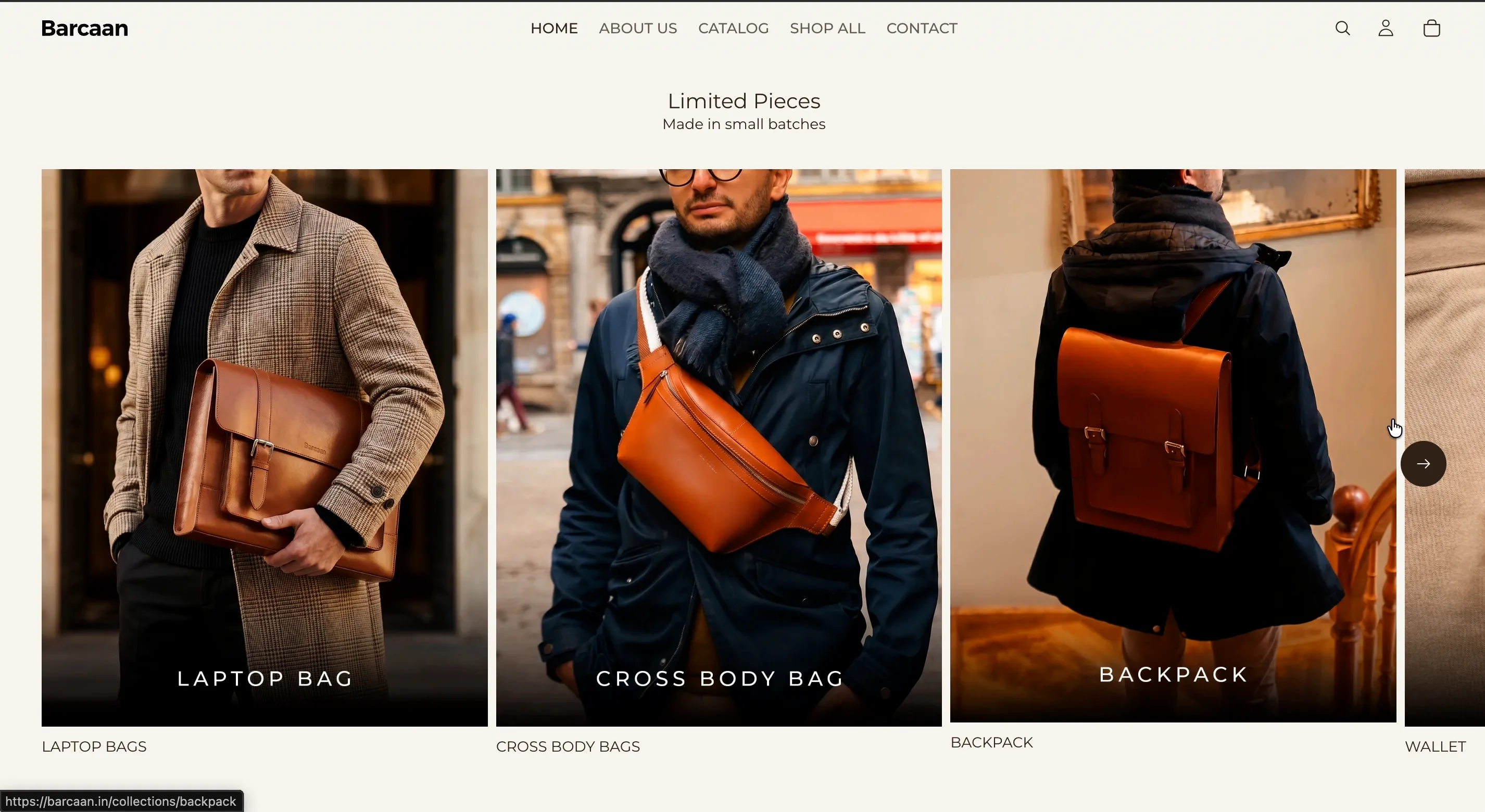
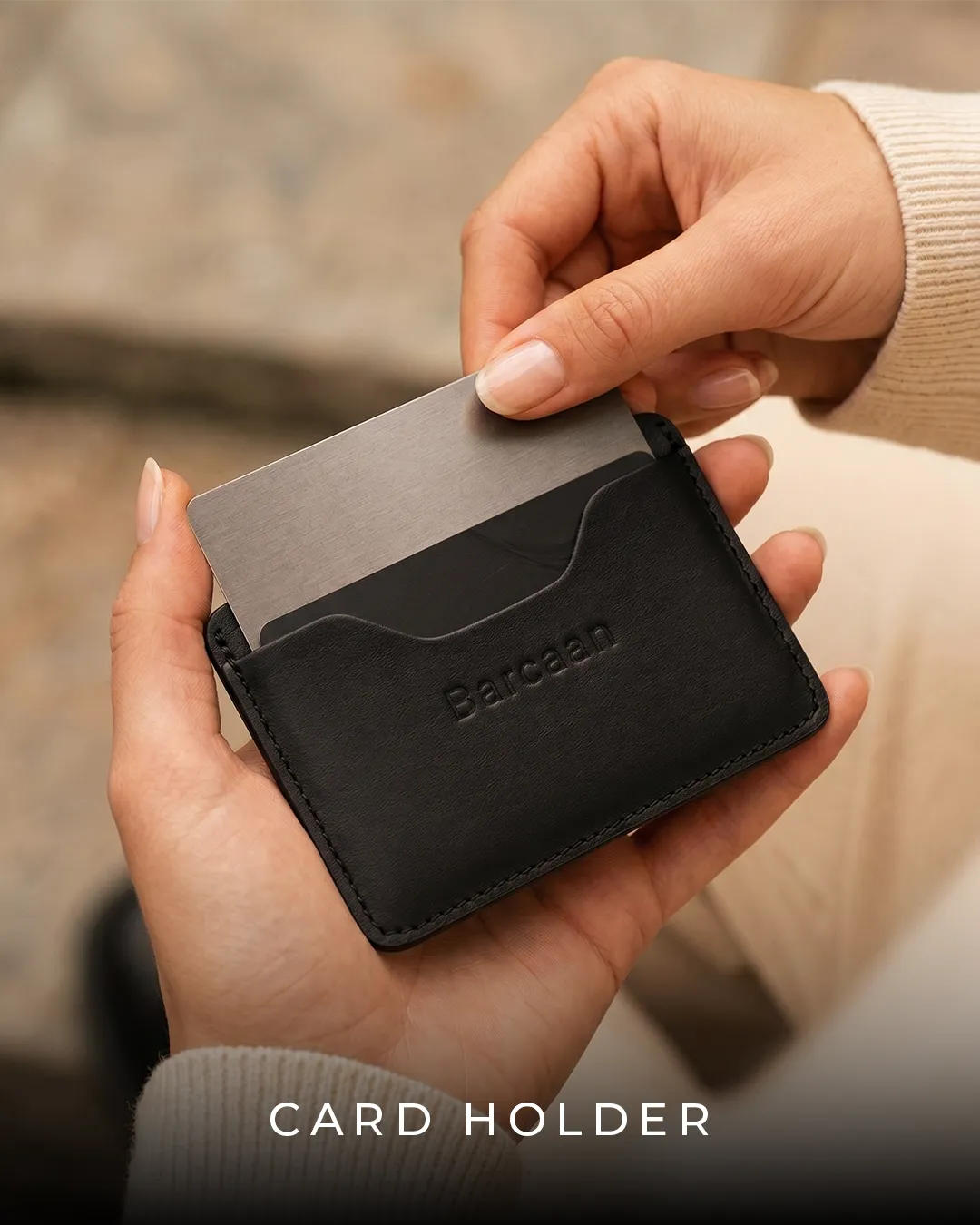
Luxury leather goods across laptop bags, crossbody bags, and sling bags, built for everyday use with a premium finish.

PRODUCT

Luxury leather goods across laptop bags, crossbody bags, and sling bags, built for everyday use with a premium finish.

MARKET AMBITION

Launching simultaneously into two structurally different markets, India and France, rather than one at a time.

MARKET AMBITION

Launching simultaneously into two structurally different markets, India and France, rather than one at a time.

POSITIONING

One brand identity, built to feel locally native in both markets without fragmenting into two different brands.

POSITIONING

One brand identity, built to feel locally native in both markets without fragmenting into two different brands.

CHALLENGE

Every regional detail, pricing, currency, tax, had to work correctly from day one, with no room for a soft, error-prone launch.

CHALLENGE

Every regional detail, pricing, currency, tax, had to work correctly from day one, with no room for a soft, error-prone launch.

Pain Point

Barcaan wasn't launching into one market. It was launching into two, at the same time, each with its own rules.

India and France don't share a currency, a tax system, or a set of customer expectations. A single generic Shopify store built for “global” customers wasn't going to work for either one properly. Wrong currency, a tax setup built for the wrong country, or pricing that reads as an afterthought is enough to break trust before a luxury customer ever adds something to cart. The challenge wasn't the product, it was building two stores that each felt correct and native to their market, without fragmenting Barcaan into two different brands in the process.

“A launch in two markets isn't one launch with extra steps. It's two launches happening at the same time.”

Services deployed
BRAND & WEBSITE STRATEGY
DUAL SHOPIFY STORE BUILD
AI-LED CREATIVE PRODUCTION
MULTI-MARKET PRICING & TAX SETUP
BACKEND & OPERATIONS SETUP
ONGOING CREATIVE DIRECTION
UGC & INFLUENCER MARKETING

What We Did

The team behind it

Brand and web strategists, Shopify developers, and AI creative producers ran both market builds in parallel, treating them as one connected system rather than two separate projects.

The team behind it

Brand and web strategists, Shopify developers, and AI creative producers ran both market builds in parallel, treating them as one connected system rather than two separate projects.

We aligned the client on the brand's visual direction first, so both the India and France stores launched from the same agreed aesthetic.

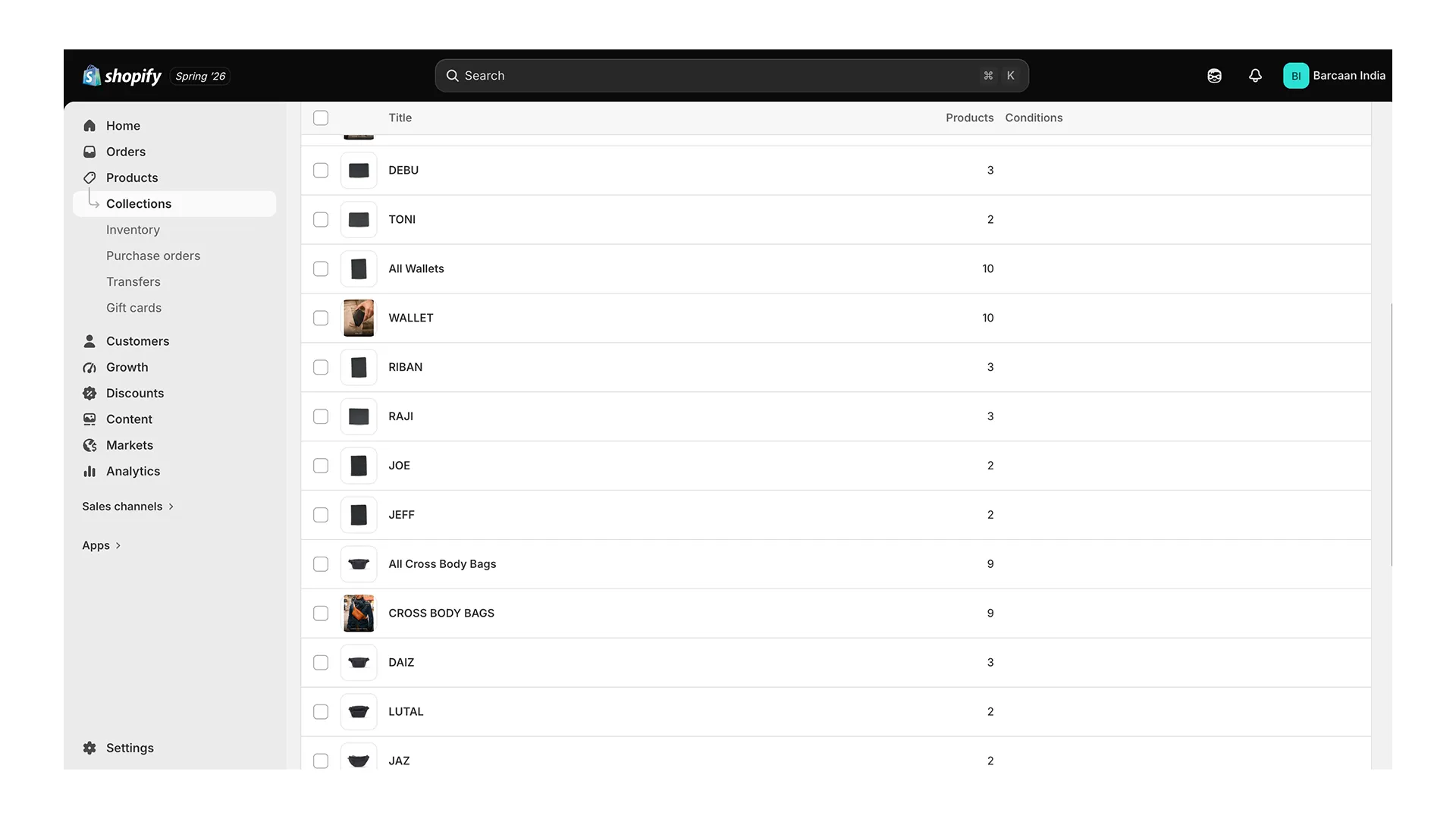
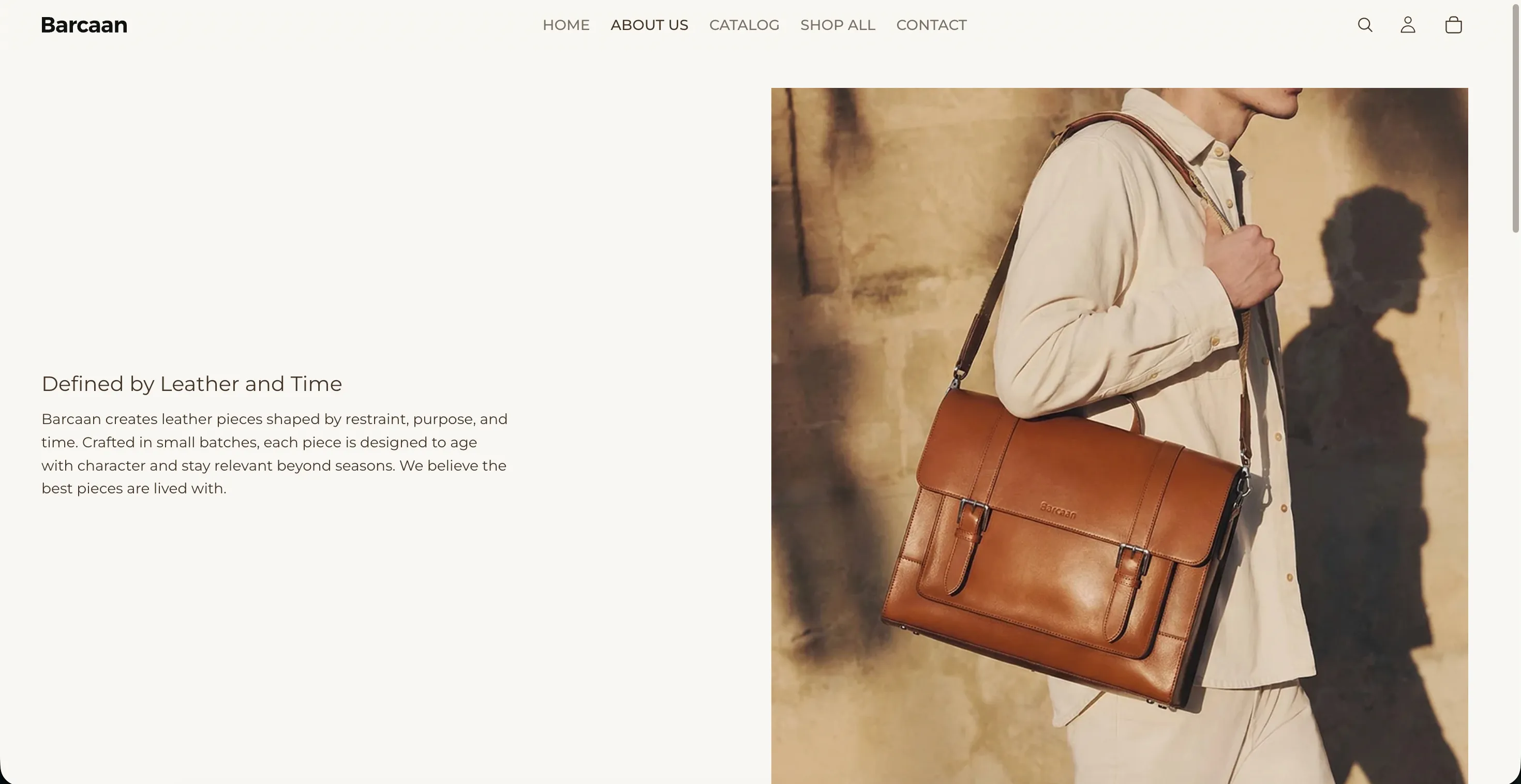
Rather than one store trying to serve both markets, we built a dedicated storefront for India and a dedicated storefront for France, sharing one brand system underneath.

Each store was set up with correct local pricing, currency, and tax logic from day one, not a single global setup stretched to cover both.

The backend was structured so managing two markets didn't mean double the manual admin work behind the scenes.

01

Built a mood board to align the brand direction before either store was built.

A two-market launch needed one agreed aesthetic before any development started. We used a mood board to lock the visual direction upfront, so India and France launched from the same brand foundation.

03

Set up correct regional pricing, currency, and tax for each market.

Getting this wrong is invisible until a customer hits checkout. We configured accurate local pricing, currency display, and tax logic for India and France independently, so neither store felt like an afterthought.

02

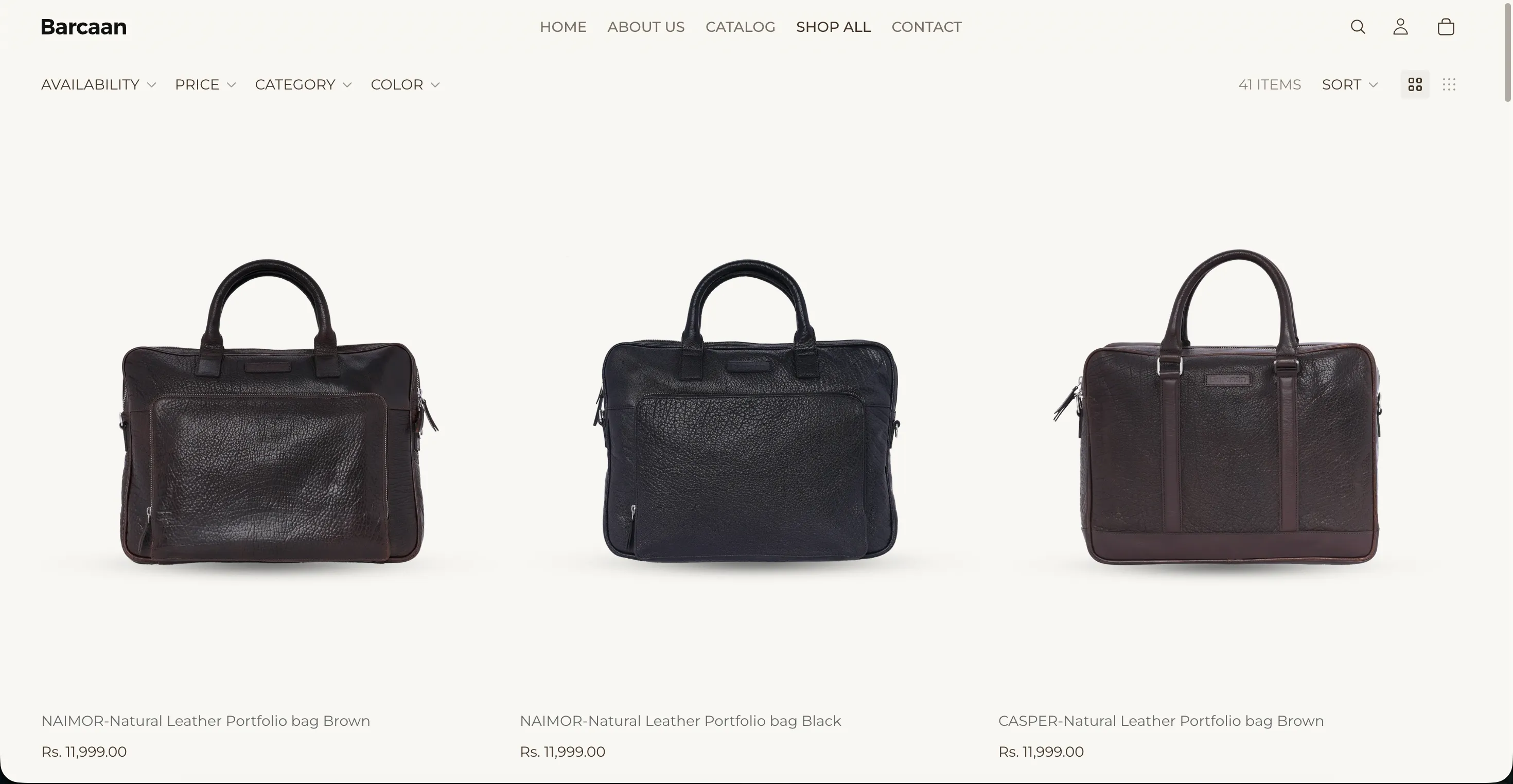
Built two separate Shopify stores, one for India, one for France.

Neither market got a compromise version of the other's store. We built two dedicated storefronts, each structured around its own market, sharing one underlying brand system.

What we did

05

Built a mood board to align the brand direction before either store was built.

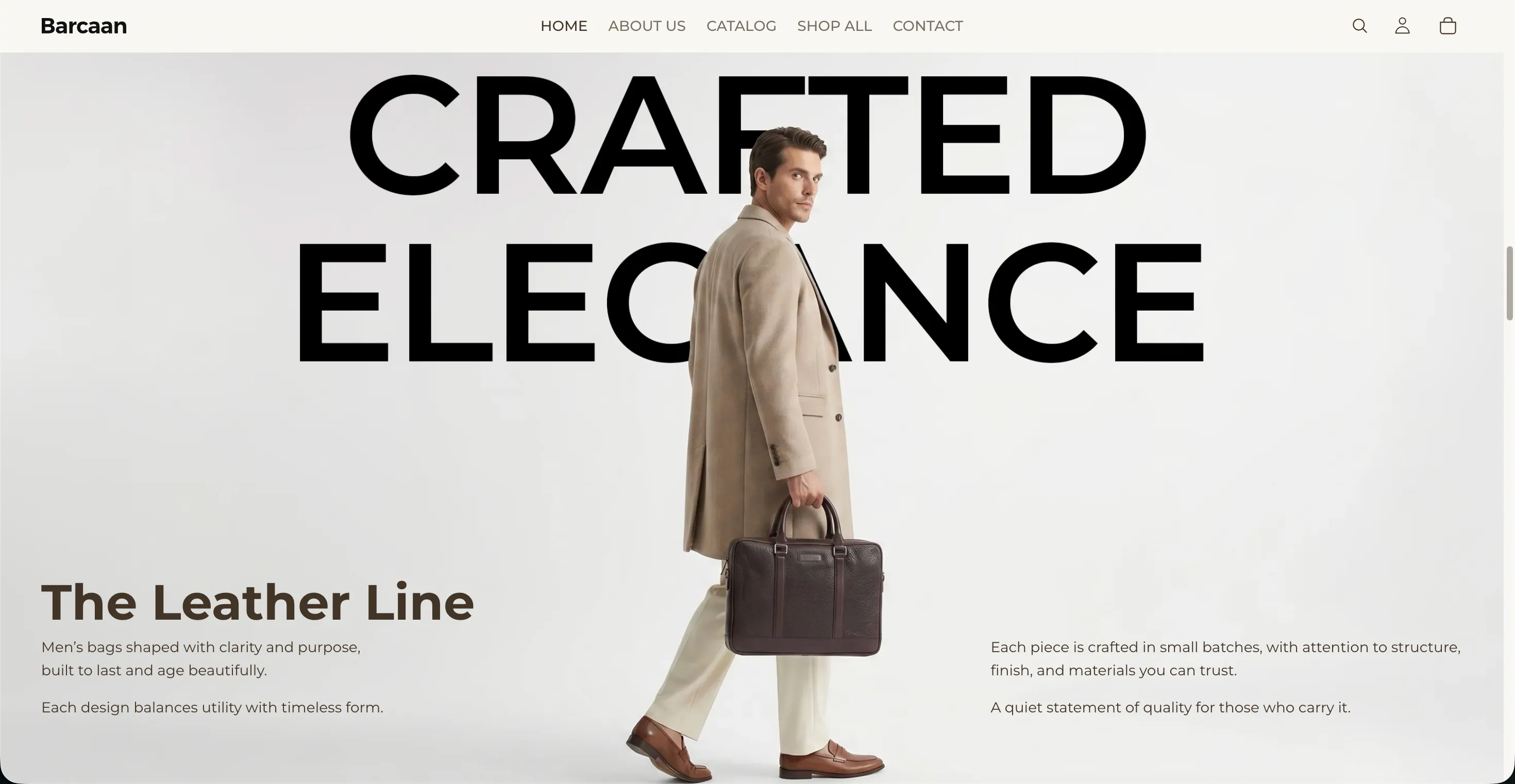
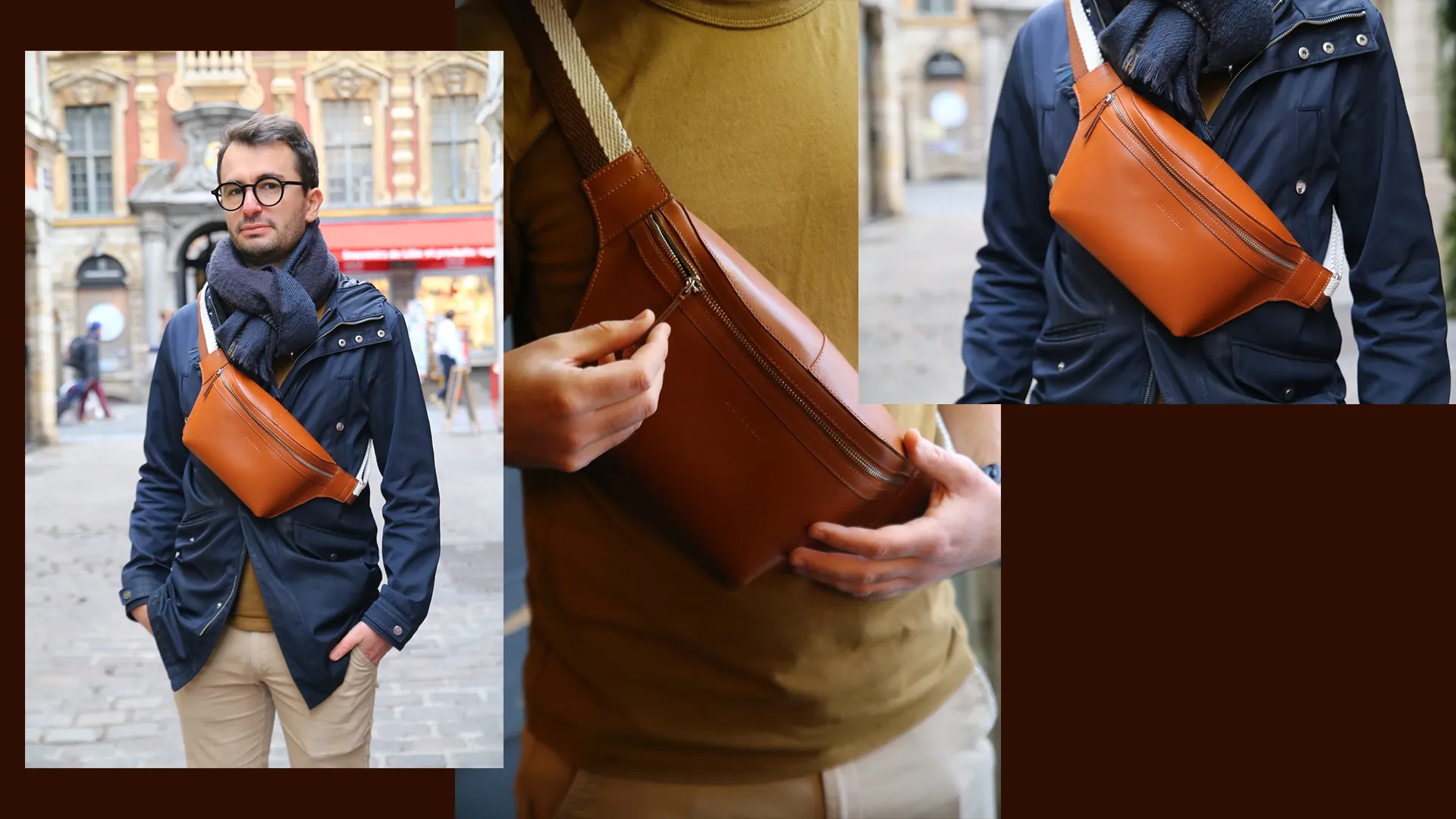
Rather than commissioning separate creative for each market, we built AI-generated banner imagery designed to work across both stores, keeping the brand visually consistent while controlling production cost.

04

Built the backend to run both stores without manual workarounds.

Two markets shouldn't mean twice the manual admin. We structured the backend so both stores could be managed without duplicated, error-prone manual processes behind the scenes.

Before & After

Before

After

Market presence

No dedicated storefronts in either market

Two dedicated, fully localized storefronts (India + France)

Two dedicated, fully localized storefronts (India + France)

Pricing & tax

Undefined for either market

Correct local currency, pricing, and tax logic per market

Correct local currency, pricing, and tax logic per market

Backend

No structure built for a dual-market launch

Fully built, running both stores without manual patchwork

Fully built, running both stores without manual patchwork

Imagery

No defined visual direction

Consistent AI-led banners shared across both stores

Consistent AI-led banners shared across both stores

Brand consistency

Risk of fragmenting into two different brands

One brand identity, two market-native storefronts

One brand identity, two market-native storefronts

Rollout

Would have needed a staggered, market-by-market approach
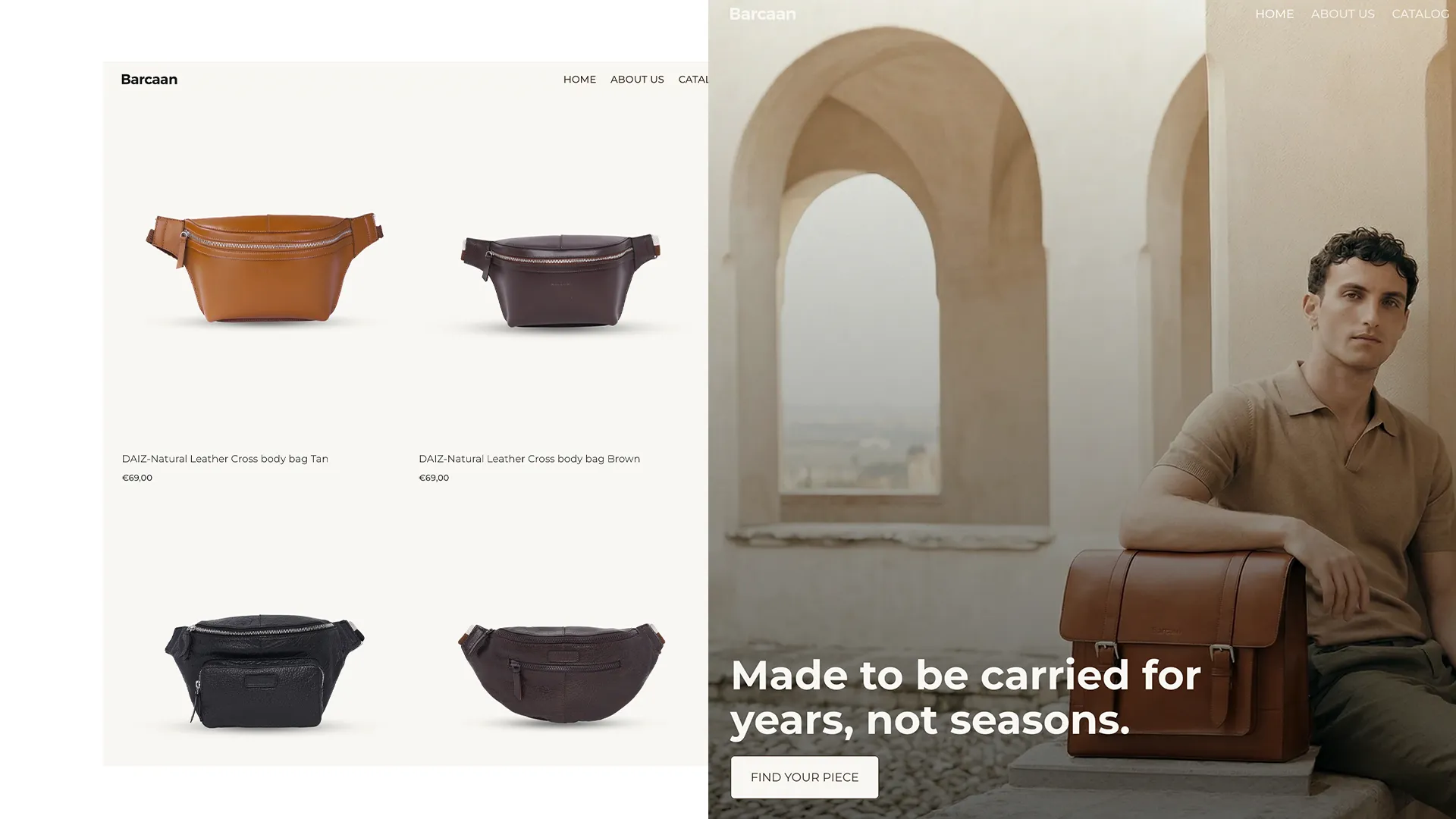
Simultaneous rollout into both markets

Simultaneous rollout into both markets

We weren't posting more. We were posting with intent — every piece tied to a positioning decision, not a content-calendar slot to fill.

We weren't posting more. We were posting with intent — every piece tied to a positioning decision, not a content-calendar slot to fill.

We weren't posting more. We were posting with intent — every piece tied to a positioning decision, not a content-calendar slot to fill.

Results

2

Fully Localized Storefronts

20+

AI Images built

89

Speed Score

2

Fully Localized Storefronts

20+

AI Images built

89

Speed Score

Beyond the numbers

Two markets launched together instead of staggered, cutting the time to full market presence in half

A backend that didn't require duplicated manual work to keep both stores accurate

One consistent brand identity across two very different customer bases, with neither market feeling like an afterthought

Image
Image
Image

Two markets launched together instead of staggered, cutting the time to full market presence in half

A backend that didn't require duplicated manual work to keep both stores accurate

One consistent brand identity across two very different customer bases, with neither market feeling like an afterthought

Image
Image
Image

Two markets launched together instead of staggered, cutting the time to full market presence in half

A backend that didn't require duplicated manual work to keep both stores accurate

One consistent brand identity across two very different customer bases, with neither market feeling like an afterthought

Image
Image
Image

This wasn't a website project. It was two correct market entries, launched together as one system.

This wasn't a website project. It was two correct market entries, launched together as one system.

Takeaways for Brand

Takeaways for Brand

Pin icon image

Launching in two markets at once is really two launches running in parallel.

Budget the complexity accordingly, not as a single project with extra steps.

Pin icon image

Pricing and tax errors break trust faster than weak creative does.

Get the invisible plumbing right before anyone judges the visuals.

Pin icon image

One brand, two markets, doesn't mean two different brands.

Consistency has to survive localization, not get lost in it.

Pin icon image

A backend built for multiple markets from day one avoids patchwork that breaks silently later.

Retrofitting is always more expensive than building it right the first time.

Pin icon image

Shared creative infrastructure lets you launch two markets for close to the cost of one.

AI-led imagery scales across storefronts without doubling production spend.

Pin icon image

Launching in two markets at once is really two launches running in parallel.

Budget the complexity accordingly, not as a single project with extra steps.

Pin icon image

One brand, two markets, doesn't mean two different brands.

Consistency has to survive localization, not get lost in it.

Pin icon image

Shared creative infrastructure lets you launch two markets for close to the cost of one.

AI-led imagery scales across storefronts without doubling production spend.

Pin icon image

Pricing and tax errors break trust faster than weak creative does.

Get the invisible plumbing right before anyone judges the visuals.

Pin icon image

A backend built for multiple markets from day one avoids patchwork that breaks silently later.

Retrofitting is always more expensive than building it right the first time.

01

Built a mood board to align the brand direction before either store was built.

A two-market launch needed one agreed aesthetic before any development started. We used a mood board to lock the visual direction upfront, so India and France launched from the same brand foundation.

02

Built two separate Shopify stores, one for India, one for France.

Neither market got a compromise version of the other's store. We built two dedicated storefronts, each structured around its own market, sharing one underlying brand system.

03

Set up correct regional pricing, currency, and tax for each market.

Getting this wrong is invisible until a customer hits checkout. We configured accurate local pricing, currency display, and tax logic for India and France independently, so neither store felt like an afterthought.

04

Built the backend to run both stores without manual workarounds.

Two markets shouldn't mean twice the manual admin. We structured the backend so both stores could be managed without duplicated, error-prone manual processes behind the scenes.

05

Built a mood board to align the brand direction before either store was built.

Rather than commissioning separate creative for each market, we built AI-generated banner imagery designed to work across both stores, keeping the brand visually consistent while controlling production cost.

What we did
Portfolio image
Portfolio image

Ready to look like you're already winning?

Ready to look like you're already winning?

Tell us about your project whether it’s a Website, Branding, or Social Media.

Tell us about your project whether it’s a Website, Branding, or Social Media.

Dubai × Bengaluru

Limited Client Partnerships

Dubai × Bengaluru

Limited Client Partnerships

Available for work

Avatar
Avatar
Avatar
Avatar
Avatar
Avatar

Our team

#Creative Squad